If you have ever watched a football game and seen a team suddenly awarded two points without scoring a touchdown or kicking a field goal, you may have witnessed a safety. For many new fans, a safety is one of the most confusing parts of football. It does not happen often, and when it does, the scoring sequence can feel unexpected.
Understanding what a safety is — and why it matters — will help you follow the game more confidently. A safety is not just about scoring two points. It also changes possession, shifts momentum, and can dramatically affect the outcome of a close game.
In this article, we will clearly explain what a safety is, how it happens, why it exists, and how it impacts strategy. We will also address common misunderstandings and break everything down step by step.
The Simple Definition of a Safety
A safety occurs when the offensive team is tackled or commits a foul in its own end zone, resulting in the defensive team being awarded two points.
In basic terms:
- The offense has the ball.
- Something goes wrong near their own goal line.
- The ball becomes dead in their own end zone.
- The defense earns two points.
After a safety, the team that gave up the points must kick the ball to the other team.
Why Is It Called a “Safety”?
The term comes from the idea that the defense has forced the offense into a “safe” situation — meaning the offense cannot advance the ball and is trapped in its own end zone. Historically, early versions of football used the term to describe a defensive success that protected the opposing goal.
Today, the name remains even though the play often feels more dramatic than “safe.”
How Does a Safety Happen?
There are several ways a safety can occur. Let’s go through them clearly.
1. Tackled in the End Zone
This is the most common type.
Step-by-Step Example:
- The offense starts a play near its own goal line.
- The quarterback drops back to pass.
- Defensive players break through the offensive line.
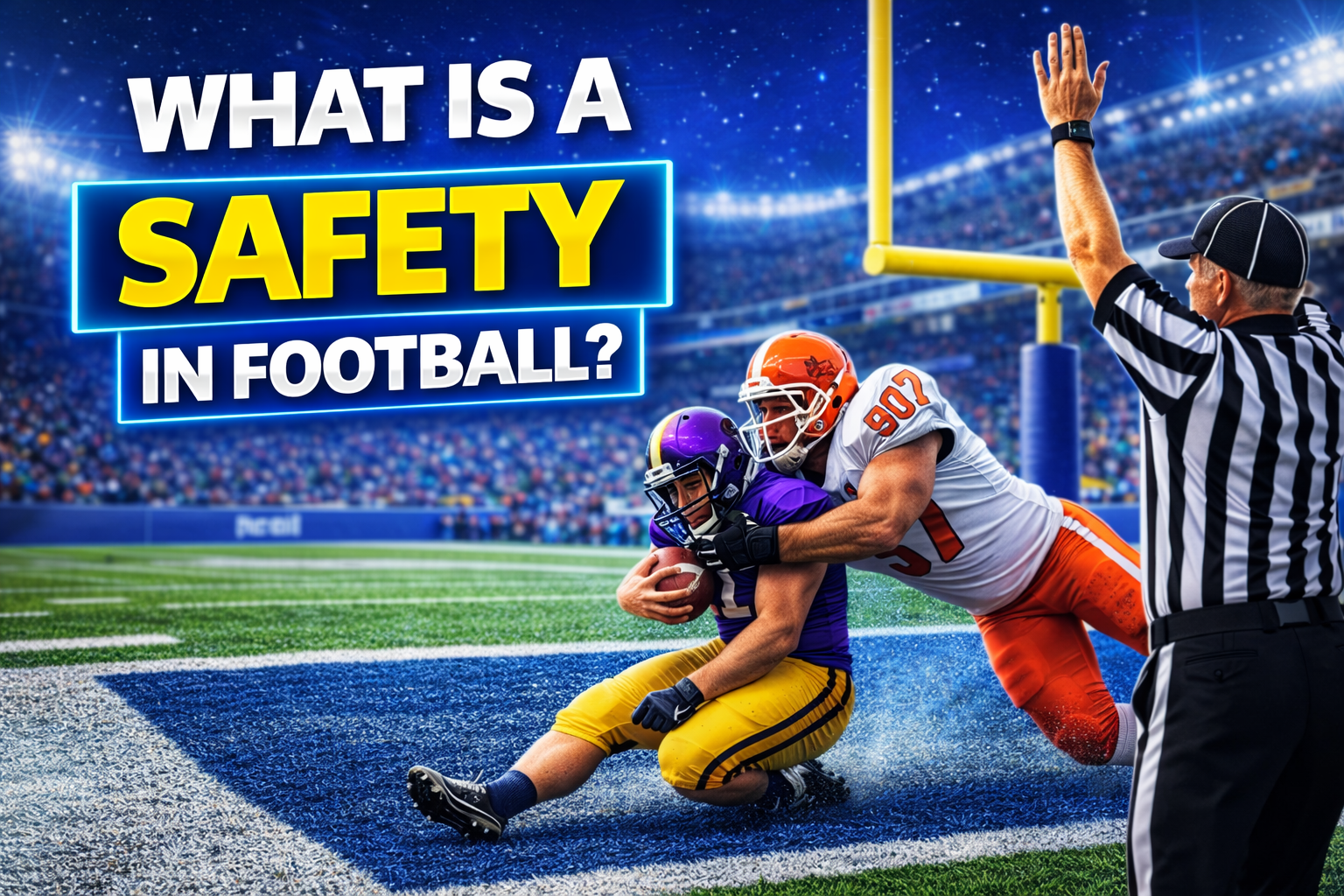
- The quarterback is tackled inside his own end zone.
- The referee signals a safety.
The defense is awarded two points.
This is often called a “sack in the end zone.”
2. Ball Carrier Runs Backward Into the End Zone
Sometimes a player begins a play outside the end zone but retreats.
Example:
- A running back receives the ball at the 3-yard line.
- He tries to avoid defenders.
- He moves backward into the end zone.
- He is tackled there.
Because the ball became dead in the offense’s own end zone, it is ruled a safety.
3. Offensive Penalty in the End Zone
Certain penalties can result in a safety.
For example:
- Holding in the end zone.
- Intentional grounding while in the end zone.
4. Fumbled Ball Out of Bounds in the End Zone
If the offense fumbles the ball and it goes out of bounds in their own end zone, it can result in a safety.
However, if the defense gains possession in the end zone, that would instead be ruled a touchdown for the defense.
How Many Points Is a Safety Worth?
A safety is worth two points.
This makes it unique because:
- A touchdown is worth six points.
- A field goal is worth three points.
- A safety is worth two points.
Although two points may seem small, it can be very important in a close game.
What Happens After a Safety?
After the two points are awarded:
- The team that conceded the safety must perform a free kick.
- The opposing team receives the ball.
- The receiving team often gets good field position.
This means a safety not only gives two points but also transfers possession — which can be a major advantage.
Why Safeties Are Rare
Safeties do not happen as often as touchdowns or field goals. That is because:
- Teams usually avoid risky plays near their own goal line.
- Offensive coordinators call conservative plays when backed up.
- Quarterbacks are trained to throw the ball away instead of taking a loss in the end zone.
Because of this, safeties are memorable when they occur.
The Strategic Impact of a Safety
A safety affects more than just the scoreboard.
1. Momentum Shift
Giving up a safety can:
- Deflate the offense.
- Energize the defense.
- Change the emotional tone of the game.
2. Field Position Advantage
Since the team that scored the safety receives the ball afterward, they can potentially extend their lead quickly.
3. End-of-Game Strategy
In rare cases, a team may intentionally take a safety late in a game to:
- Run time off the clock.
- Improve field position for a defensive stand.
This is a calculated decision and usually happens only in specific situations.
Difference Between a Safety and a Touchback
These two terms often confuse new fans.
| Safety | Touchback |
|---|---|
| Defense scores 2 points | No points scored |
| Offense loses possession | Possession depends on play |
| Occurs in offense’s end zone | Ball becomes dead in end zone under specific conditions |
A touchback resets field position. A safety results in points and a change in possession.
What Is a Defensive Safety Position?
The word “safety” can also refer to a defensive position in football.
There are usually:
- Free Safety
- Strong Safety
These players:
- Play in the defensive backfield.
- Protect against deep passes.
- Help stop long runs.
However, the position of safety is completely different from the scoring play called a safety. The only connection is the name.
Common Misunderstandings About Safeties
Misunderstanding 1: A Safety Is the Same as a Touchdown
No. A touchdown gives six points. A safety gives two.
Misunderstanding 2: A Safety Only Happens on Sacks
While sacks in the end zone are common causes, penalties and fumbles can also result in a safety.
Misunderstanding 3: The Defense Must Recover the Ball
Not true. The defense does not need to recover the ball. The offense simply needs to be ruled down in its own end zone.
Real-World Example Scenario
Imagine this situation:
- Team A is leading 14–13.
- Team B has the ball at its own 1-yard line.
- On third down, the quarterback is pressured.
- He retreats to avoid defenders.
- He is tackled in the end zone.
Team A is awarded two points, making the score 16–13.
Then Team B must kick the ball to Team A. Now Team A has both the lead and possession.
That is how powerful a safety can be.
Why Offensive Teams Avoid Risk Near the Goal Line
When an offense is backed up near its own end zone, it may:
- Run safer plays.
- Avoid long pass attempts.
- Accept a small loss rather than risk a big one.
Coaches understand the danger of giving up a safety. Even two points can change the outcome of a tightly contested game.
How Officials Signal a Safety
When a safety occurs:
- The referee raises both arms above their head.
- The whistle is blown to stop play.
The signal looks similar to other scoring signals, but it represents two points for the defense.
Practical Advice for New Fans
If you are learning football, here are tips to quickly recognize a safety:
- Watch the position of the ball relative to the goal line.
- If the offense is tackled in its own end zone, expect a safety.
- Listen for the referee’s announcement.
- Notice that the scoring team then receives the ball.
Once you understand this pattern, safeties become easy to recognize.
Frequently Asked Questions
Can a safety happen on a kickoff?
Not in the traditional sense. However, if a team mishandles a kickoff and is tackled in its own end zone after establishing possession, it can result in a safety.
Is a safety good or bad?
It depends on perspective:
- Good for the defense.
- Bad for the offense that conceded it.
Has a game ever been decided by a safety?
Yes. While uncommon, some games have been decided by the two points from a safety.
Can a team intentionally take a safety?
Yes, in certain late-game situations where time management and field position matter more than two points.
The Psychological Effect of a Safety
Even though it is only two points, a safety can:
- Create panic in an offense.
- Boost defensive confidence.
- Excite the crowd.
Because it often happens under pressure near the goal line, it can feel dramatic and intense.
Final Thoughts
A safety in football is a defensive scoring play worth two points that occurs when the offensive team is tackled or commits a foul in its own end zone. It is less common than touchdowns or field goals, but it plays an important role in the strategy and flow of the game.
To summarize:
- It is worth two points.
- It happens in the offense’s own end zone.
- The defense scores.
- The scoring team gains possession afterward.
Understanding the safety helps you follow close games, recognize momentum shifts, and appreciate the strategic depth of football. The next time you see a quarterback trapped near the goal line, you will know exactly what is at stake.