SEO Title
What Is a TFL in Football? Meaning, Stats, Rules & Game Impact Explained
Meta Description
Learn what a TFL in football means, how tackles for loss are recorded, why they matter, and which defensive players excel at creating them.
Focus Keyword
What Is a TFL in Football
URL Slug
what-is-a-tfl-in-football
Thumbnail Text
TFL Explained!
What Does TFL Mean in Football?
Featured Image Idea
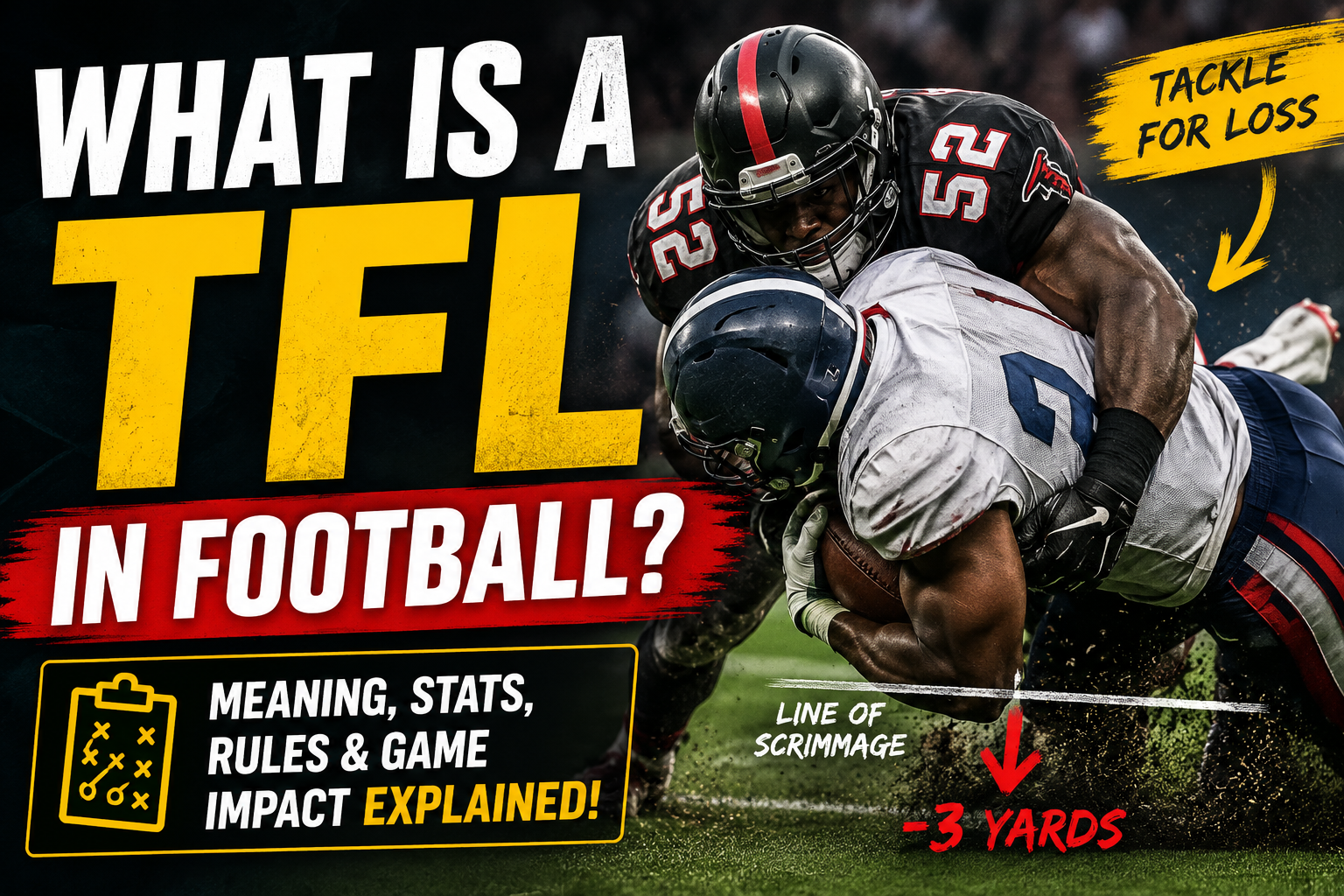
A linebacker bursting through the offensive line and tackling a running back three yards behind the line of scrimmage, with bold text saying “TFL Explained.”
SEO Tags
- What Is a TFL in Football
- TFL Meaning Football
- Tackle for Loss
- Football Defensive Stats
- Football Terms Explained
Full Article
What Is a TFL in Football? A Complete Guide to Tackles for Loss
Football is a game of inches, strategy, and momentum. While touchdowns and interceptions often steal the headlines, many defensive plays quietly change the outcome of games. One of the most valuable defensive statistics is the TFL, or Tackle for Loss.
Whether you’re a new fan, fantasy football enthusiast, young player, or simply curious about football terminology, understanding TFLs will give you a deeper appreciation of defensive football.
What Is a TFL in Football?
A TFL (Tackle for Loss) occurs when a defensive player tackles the ball carrier behind the original line of scrimmage, causing the offense to lose yardage.
Instead of gaining positive yards, the offense moves backward, making it more difficult to achieve a first down or score.
For example:
- The offense starts at its own 30-yard line.
- The running back receives the handoff.
- A linebacker tackles him at the 27-yard line.
The offense loses three yards, and the defender is credited with a TFL.
Why Is a TFL So Important?
A tackle for loss does much more than reduce yardage. It changes the entire offensive strategy.
A successful TFL can:
- Force longer passing situations
- Increase pressure on the quarterback
- Reduce rushing efficiency
- Create third-and-long situations
- Increase the chances of punts or turnovers
Many defensive coordinators build aggressive game plans specifically to generate tackles for loss.
Understanding the Line of Scrimmage
Before learning about TFLs, it’s important to understand the line of scrimmage.
The line of scrimmage is the imaginary line where the football is placed before each play begins.
If the ball carrier is tackled:
- Beyond the line → positive gain
- At the line → no gain
- Behind the line → tackle for loss
This simple concept determines whether a defender earns a TFL.
Running Plays
Most tackles for loss happen on rushing attempts.
Examples include:
- Inside runs
- Outside runs
- Draw plays
- Jet sweeps
- Option plays
If the runner is stopped behind the line, it counts as a TFL.
Quarterback Runs
Quarterbacks who scramble or run designed plays can also be tackled for loss.
Examples include:
- Quarterback keepers
- Read-option runs
- Designed QB draws
These plays qualify as TFLs when the quarterback loses yards.
Screen Passes
The defender receives a tackle for loss because the offensive player lost yardage after catching the ball.
This is one of the most common questions among football fans.
The answer is both yes and no.
A sack is recorded when:
- The quarterback intends to pass
- The defense tackles him behind the line
Every sack is also considered a tackle for loss in many statistical systems.
However:
For example:
- Tackling a running back for minus four yards is a TFL but not a sack.
How Official Scorers Record a TFL
Stat crews watch every play carefully.
A defender earns a TFL when:
- He is primarily responsible for stopping the ball carrier behind the line.
- Multiple defenders may share the tackle.
- The lost yardage is officially recorded.
College football and professional football use similar definitions, although statistical reporting may vary slightly.
Which Defensive Positions Get the Most TFLs?
Linebackers
Linebackers read plays quickly and attack running lanes.
They often lead teams in tackles for loss because they combine speed with strength.
Defensive Ends
Edge rushers regularly penetrate the offensive line.
They stop running plays and sack quarterbacks, making them consistent TFL producers.
Defensive Tackles
Interior defenders can disrupt running plays before they develop.
Powerful defensive tackles often create tackles for loss by beating blockers immediately after the snap.
Safeties and Cornerbacks
Although less common, defensive backs also record TFLs.
Examples include:
- Cornerback blitzes
- Safety run support
- Tackling wide receivers behind the line on screens
How Coaches Value Tackles for Loss
Coaches love TFLs because they destroy offensive rhythm.
A single negative play can turn:
- 2nd-and-5 into 3rd-and-8
- 1st-and-10 into 2nd-and-13
- Goal-line opportunities into difficult passing situations
Defensive coordinators often emphasize penetration and aggressive pursuit specifically to increase TFL numbers.
How Players Create More TFLs
Elite defenders rely on several techniques.
Quick Reaction
Reading offensive formations allows defenders to attack immediately.
The faster the reaction, the better the chance of reaching the ball carrier.
Gap Discipline
Every defender has a specific gap assignment.
Maintaining proper positioning prevents running lanes and creates opportunities for tackles behind the line.
Explosive First Step
Many successful defenders win with speed rather than size.
A quick first step helps them beat blockers before the play develops.
Proper Tackling Technique
Even after reaching the backfield, defenders must finish the play.
Strong tackling fundamentals ensure the runner cannot escape and turn a negative play into a positive gain.
Famous TFL Specialists in Football
Some defensive stars built their reputations by constantly disrupting offenses.
Elite defenders consistently generate:
- Tackles for loss
- Sacks
- Quarterback pressures
- Forced fumbles
These players combine athletic ability, football intelligence, and relentless effort to dominate games.
Their ability to create negative plays often changes momentum and forces offenses into predictable situations.
How TFLs Affect Team Defense
Teams that consistently produce tackles for loss usually enjoy several advantages.
Better Third-Down Defense
Long-yardage situations make passing more predictable.
Defenses can blitz aggressively and cover passing routes more effectively.
More Turnover Opportunities
Quarterbacks under pressure make mistakes.
Running backs forced into crowded backfields are also more likely to fumble.
Improved Field Position
Stopping drives early gives the offense better starting field position after punts.
Over an entire season, these hidden yards can significantly impact wins and losses.
TFL vs Other Defensive Statistics
| Statistic | Meaning |
|---|---|
| Tackle | Stops the ball carrier |
| Tackle for Loss | Stops the ball carrier behind the line |
| Sack | Tackles the quarterback on a passing play |
| Forced Fumble | Causes the offense to lose possession |
| Interception | Catches an opponent’s pass |
Each statistic measures defensive performance differently, but tackles for loss highlight a player’s ability to disrupt plays before they develop.
Why Fans Should Pay Attention to TFLs
Many casual fans focus only on touchdowns or sacks.
However, tackles for loss reveal which defenders consistently impact games.
A linebacker with:
- 120 tackles
- 18 tackles for loss
- 5 sacks
may be more valuable than another player with similar tackle totals but fewer disruptive plays.
TFLs demonstrate anticipation, discipline, speed, and physicality—all qualities that define elite defensive football.
Common Misconceptions About TFLs
Every Negative Play Is a Sack
False.
Only quarterback passing plays result in sacks.
Running backs, receivers, and quarterbacks on designed runs can all be tackled for loss without a sack being recorded.
TFLs Only Happen on Running Plays
False.
Screen passes and quarterback runs can also produce tackles for loss.
One Big TFL Wins the Game
Not necessarily.
While a tackle for loss creates momentum, football remains a team sport where consistent defensive execution is the key to success.
The Growing Importance of TFL Analytics
Modern football analytics increasingly value negative plays.
Teams analyze:
- TFL percentage
- Defensive success rate
- Run disruption metrics
- Backfield penetration
These statistics help coaches identify players who consistently create difficult situations for opposing offenses.
As football becomes more data-driven, tackles for loss continue to gain importance in player evaluation and game planning.
Conclusion
A TFL, or Tackle for Loss, is one of football’s most impactful defensive statistics. By stopping a ball carrier behind the line of scrimmage, defenders force offenses into difficult situations, create momentum swings, and increase the likelihood of punts or turnovers.
Whether produced by a linebacker shooting through a gap, a defensive end beating a blocker, or a safety stopping a screen pass, every tackle for loss represents excellent anticipation, discipline, and execution.
The next time you watch a football game, pay attention to these negative plays—you’ll quickly see why coaches, analysts, and fans value TFLs as a true measure of defensive dominance.
Frequently Asked Questions (FAQs)
What does TFL stand for in football?
TFL stands for Tackle for Loss, meaning a defender tackles the ball carrier behind the line of scrimmage.
Is every sack a TFL?
Yes. A sack is generally counted as a tackle for loss because the quarterback loses yardage on a passing play.
Can a wide receiver be tackled for a TFL?
Yes. If a receiver catches a pass behind the line and is tackled before reaching it again, the play results in a tackle for loss.
Linebackers and defensive ends usually lead teams in tackles for loss because they frequently attack running plays and pressure quarterbacks.
Why are TFLs important?
They force offenses into longer-yardage situations, disrupt game plans, improve defensive efficiency, and often lead to punts or turnovers.
Does a quarterback run count as a TFL?
Yes. If a quarterback is tackled behind the line on a designed run or scramble, the defender earns a tackle for loss.
FAQ Schema Questions
- What is a TFL in football?
- What does TFL stand for in football stats?
- Is a sack considered a tackle for loss?
- Which players get the most TFLs?
- Why are tackles for loss important in football?
- How is a TFL officially recorded?
Internal Linking Suggestions
- What Is a Sack in Football?
- Football Positions Explained
- What Is the Line of Scrimmage?
- Defensive Football Statistics Guide
- How NFL Defensive Schemes Work
External Authority Sources Suggestions
- NFL Official Statistics Guide
- NCAA Football Statistics Manual
- Pro Football Reference
- USA Football Coaching Resources
- National Federation of State High School Associations (NFHS) Football Rules


