College football is one of the most intense and physical sports in the United States. Big hits, fast plays, and emotional rivalries are part of what makes the game exciting. But as the sport has evolved, so has the understanding of player safety—especially when it comes to head and neck injuries. That’s where the targeting rule comes in.
If you’ve ever watched a college football game and seen a player ejected after a lengthy replay review, chances are it involved targeting. The rule can be confusing, controversial, and difficult to interpret in real time. Many fans struggle to understand why some hits result in ejections while others do not.
This article explains what targeting is in college football, why the rule exists, how officials determine it, what penalties apply, and what common misunderstandings surround it. Whether you are new to the sport or simply want clarity, this guide breaks everything down step by step.
Table of Contents
ToggleWhy the Targeting Rule Matters
Football is a collision sport. While physical contact is part of the game, repeated blows to the head have been linked to long-term brain injuries, including concussions and chronic traumatic encephalopathy (CTE). Over time, medical research made it clear that head and neck injuries can have serious consequences beyond the playing field.
The targeting rule was introduced to reduce dangerous hits—especially those involving the crown of the helmet or direct contact to an opponent’s head or neck area. The goal is not to remove physicality from the sport, but to encourage safer tackling techniques and protect players from avoidable harm.
In short, targeting is about safety first.
What Is Targeting?
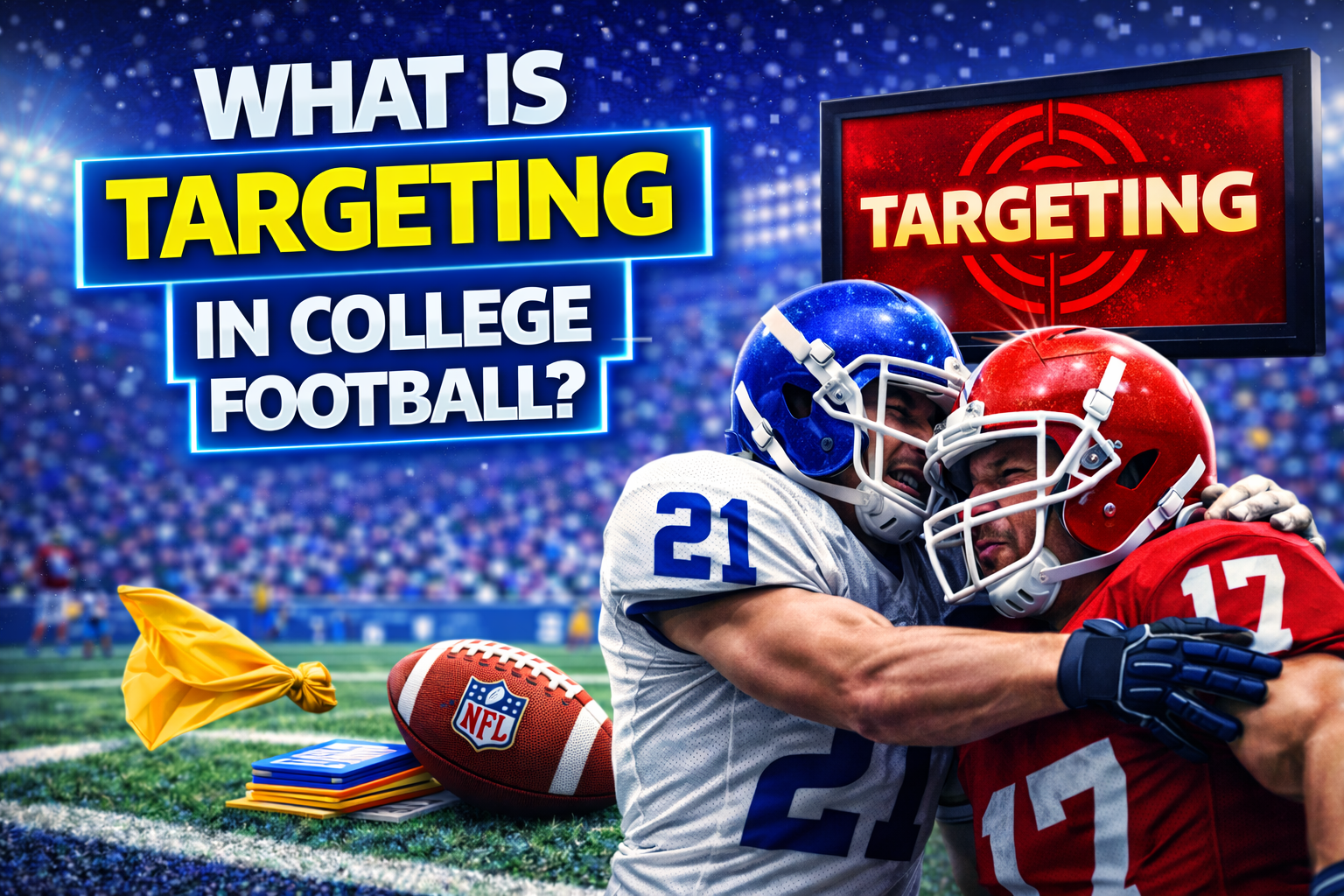
At its core, targeting is a personal foul in college football that involves:
-
Leading with the crown (top) of the helmet to initiate contact against any opponent.
Both elements are important. A hit does not need to satisfy both conditions—meeting either one can result in a targeting penalty.
Let’s break those down clearly.
This part of the rule focuses on protecting players who are in vulnerable positions.
Who Is Considered a Defenseless Player?
A defenseless player is someone who, because of their position or focus, cannot reasonably protect themselves from contact. Examples include:
-
A receiver attempting to catch a pass
-
A quarterback after throwing the ball
-
A player on a kickoff or punt return
-
A ball carrier being held up by another defender
-
A player on the ground
If a defender makes forcible contact to the head or neck area of one of these players, it may be ruled targeting.
It’s important to understand that not all contact to the head results in targeting. Officials look for forcible contact combined with indicators such as:
-
Launching upward into the opponent
-
Lowering the head before contact
-
Leading with the helmet
Targeting Rule #2: Leading With the Crown of the Helmet
The second part of the rule applies to any opponent—not just defenseless players.
If a player lowers their head and initiates contact with the crown (the very top) of their helmet, it can be targeting regardless of where the contact occurs.
This portion of the rule focuses on preventing players from using their helmet as a weapon. Leading with the crown is dangerous not only for the opponent but also for the player delivering the hit. It increases the risk of serious neck and spine injuries.
This is why coaches emphasize “see what you hit” and “keep your head up” when teaching tackling technique.
How Officials Determine Targeting
Targeting calls are automatically reviewed by replay officials. Even if a referee throws the flag on the field, the call must be confirmed through video review before the penalty and ejection become official.
Step-by-Step Review Process
-
The game pauses for replay review.
-
Officials examine multiple camera angles.
-
They determine whether all elements of targeting are present.
-
The call is either confirmed or overturned.
If replay officials do not see clear evidence of targeting, the penalty is removed.
This review process is important because the consequences are severe.
What Is the Penalty for Targeting?
Targeting carries two major consequences:
1. 15-Yard Personal Foul Penalty
The opposing team is awarded 15 yards from the previous spot of the ball (or added to the end of the play).
2. Automatic Ejection
The player who committed targeting is immediately disqualified from the game.
If the foul occurs in the second half, the player must also miss the first half of the next game.
This automatic ejection is one reason targeting is so controversial. A single play can remove a key player from a crucial game.
Why Is the Rule So Controversial?
Despite its safety intentions, the targeting rule often sparks debate.
Judgment Calls
Not every hit is clear-cut. Football happens at full speed. A defender may aim for the chest, but the offensive player lowers their body at the last second, causing helmet-to-helmet contact.
In these situations, fans may feel the penalty is harsh—especially when replay angles are inconclusive.
Severity of the Penalty
Some critics argue that automatic ejection is too strict, especially for borderline plays. Others believe the harsh penalty is necessary to change behavior and improve safety.
Intent vs. Outcome
The rule does not require intent. A player does not have to mean to target. If the action meets the rule’s criteria, the penalty applies.
This can frustrate fans who believe accidental contact should not result in ejection.
Common Misunderstandings About Targeting
Let’s clear up a few frequent misconceptions.
“All Helmet-to-Helmet Hits Are Targeting”
Not necessarily. Incidental helmet contact does not automatically equal targeting. Officials look for forcible contact and specific indicators.
Intent does not determine the penalty. The focus is on player safety and the action itself.
“It’s Only Called on Defensive Players”
While targeting is most often called on defenders, offensive players can also be penalized—especially if they lower their head and lead with the crown of the helmet.
“Replay Always Gets It Right”
Replay reduces mistakes, but interpretation still involves human judgment. Some calls remain debated even after review.
How Players Adjust to the Rule
Over time, coaching techniques have evolved to reflect the targeting rule.
Emphasis on Proper Tackling
Coaches now teach defenders to:
-
Keep their heads up
-
Wrap up with arms
-
Aim for the midsection
-
Avoid launching
These changes are designed to reduce dangerous contact while maintaining effective defense.
Safer Practice Methods
Many programs limit full-contact practices to reduce repeated head impacts. Player education about concussion awareness is also more common than in the past.
Targeting vs. NFL Rules
College football’s targeting rule is stricter than similar rules in professional football.
In the NFL, players can be penalized and fined for illegal hits, but automatic ejection is less common and usually requires especially flagrant behavior.
College football chose a stronger enforcement approach to prioritize safety at the amateur level.
Frequently Asked Questions
Can Targeting Be Overturned?
Yes. If replay officials do not see clear evidence supporting the call, it can be reversed and the player will remain in the game.
Does the Offensive Player’s Movement Matter?
Yes. Officials consider whether the offensive player changed position suddenly, but the defender is still responsible for avoiding illegal contact.
Can a Player Appeal a Targeting Call?
There is no in-game appeal beyond replay review. However, conferences may review calls for future evaluation or rule discussion.
Does Targeting Apply on Special Teams?
Yes. Kickoffs and punts are common situations where targeting occurs because players build up speed before contact.
Practical Advice for Fans Watching a Game
If you’re trying to understand a targeting review while watching a game, look for these signs:
-
Did the defender lower their head before contact?
-
Did the defender launch upward?
-
Was the offensive player defenseless at that moment?
Watching replays closely with these factors in mind can help you better understand the officials’ decision.
It may not eliminate disagreement, but it makes the process clearer.
The Bigger Picture: Safety in College Football
Targeting is part of a broader movement in football toward reducing head injuries. Equipment improvements, medical protocols, and rule changes all reflect growing awareness of long-term risks.
The rule does not eliminate dangerous hits entirely. Football remains physical. But it encourages players to adapt their technique in ways that lower the chances of severe injury.
Over time, younger athletes learn safer tackling habits early in their development, which can shape the sport’s future.Conclusion
Targeting in college football is a safety-focused rule designed to prevent dangerous contact to the head and neck area. It applies when a player makes forcible contact against a defenseless opponent’s head or neck, or when they lead with the crown of the helmet against any opponent.
Although the rule can be controversial—especially because it includes automatic ejection—its primary purpose is clear: protect players from serious injury.
Understanding targeting requires looking beyond the immediate reaction to a big hit. It involves recognizing how the game has changed in response to medical knowledge and long-term health concerns.
For fans, players, and coaches alike, the rule represents a balance between preserving football’s physical nature and making it safer for those who play it.
As the sport continues to evolve, discussions about targeting will likely continue. But at its core, the rule reflects a simple principle: competition should never come at the cost of unnecessary harm.