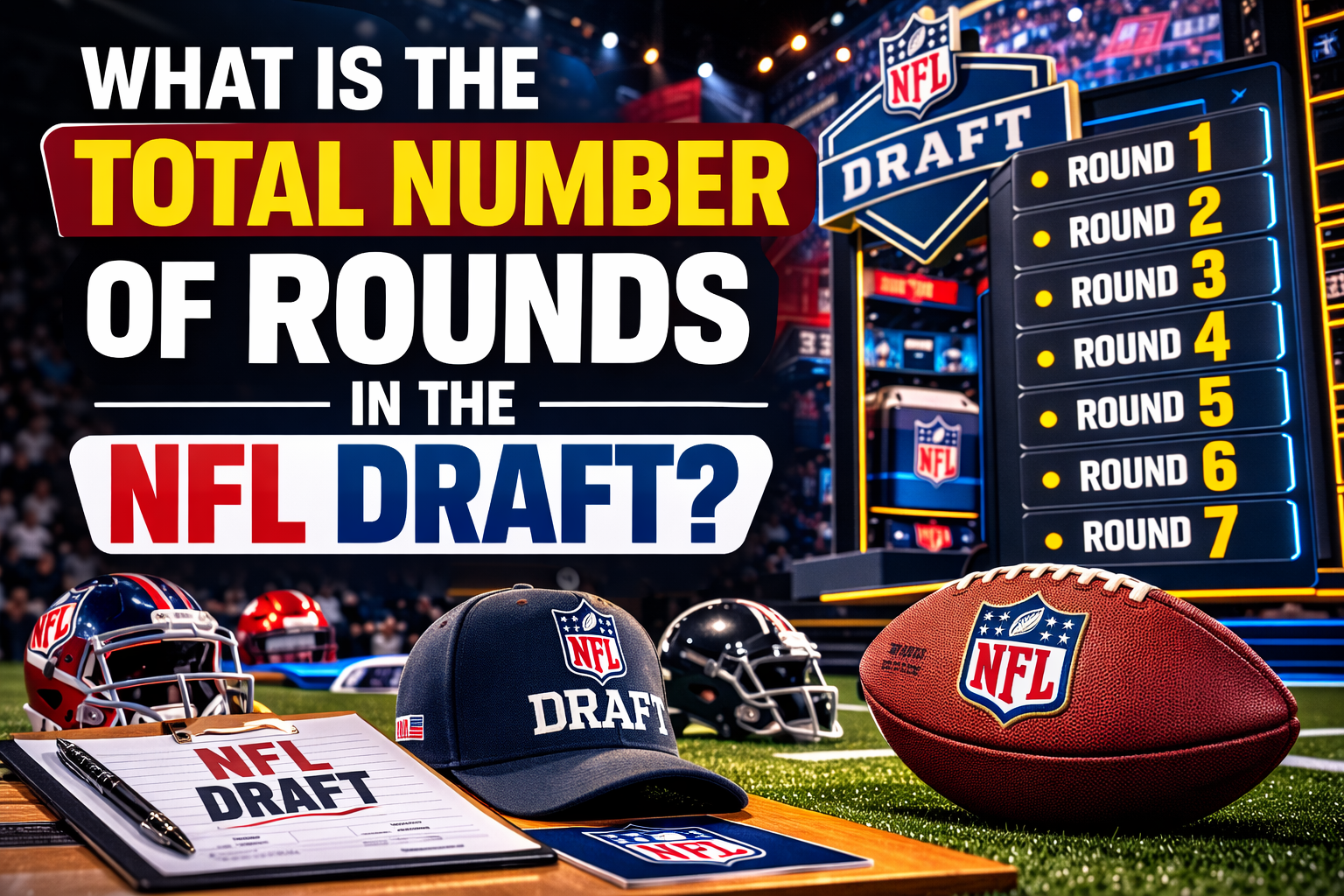
Every spring, the NFL Draft becomes one of the most discussed events in American sports. Fans debate which college players their team should select, analysts predict future stars, and franchises attempt to reshape their rosters for the seasons ahead. Yet many casual viewers still ask a basic question: How many rounds are in the NFL Draft?
The short answer is seven. But understanding what that actually means — how the rounds work, how many picks exist, and why the structure matters — requires a deeper look.
This guide explains the NFL Draft in clear, practical terms. Whether you are new to football or simply want to understand the process better, this article walks through everything step by step.
The Simple Answer: Seven Rounds
The NFL Draft consists of seven rounds.
In each round, every team has the opportunity to select one eligible college player — unless that team has traded its pick. Since there are 32 NFL teams, a standard draft includes at least:
32 teams × 7 rounds = 224 picks
However, the total number is usually higher because the league awards compensatory picks, which are additional selections given to certain teams.
In most years, the final total lands around 250–260 selections.
Why the Draft Has Seven Rounds
The draft did not always have seven rounds. In earlier decades, the NFL Draft included far more rounds — sometimes more than 20. As the league grew and player evaluation became more sophisticated, the number of rounds was gradually reduced.
Seven rounds strikes a balance:
-
It allows teams to address multiple roster needs.
-
It keeps the event manageable for players, teams, and fans.
-
It ensures that both elite prospects and overlooked players have opportunities.
Today’s format reflects the modern size of NFL rosters and the structure of college football talent pools.
How Each Round Works
Let’s break down how the draft unfolds.
Round 1: The Spotlight Round
The first round is the most famous and widely watched portion of the draft.
-
It features 32 picks (one per team).
-
The Super Bowl champion picks last.
This order is designed to promote competitive balance. Teams that struggled the previous season get earlier opportunities to select top prospects.
First-round players are often expected to make an immediate impact. They also receive larger rookie contracts compared to later-round picks.
Rounds 2 and 3: High-Value Starters
Rounds two and three are still extremely important. Many reliable starters and future stars are selected here.
By this stage:
-
Teams focus on value.
-
Some players fall due to team needs.
-
Trades become more common.
These rounds often produce players who outperform expectations.
Rounds 4–7: Depth and Development
The final four rounds are where teams:
-
Add depth to their roster.
-
Select developmental prospects.
-
Take chances on players with potential but risk.
Late-round picks may not be guaranteed roster spots. However, many successful NFL players have come from these rounds.
How Draft Order Is Determined
Understanding the number of rounds is only part of the picture. It’s equally important to understand how teams are ordered within each round.
Step 1: Non-Playoff Teams
The 18 teams that miss the playoffs are ordered based on their regular-season record:
-
Worst record picks first.
-
Best record among non-playoff teams picks last in this group.
Step 2: Playoff Teams
Playoff teams are ordered based on how far they advanced:
-
Conference championship losers pick later.
-
The Super Bowl champion picks last.
This system rewards stronger teams with later selections and supports parity across the league.
What Are Compensatory Picks?
In addition to the standard seven picks per team, the NFL awards compensatory picks at the end of rounds three through seven.
Compensatory picks:
-
Cannot be traded in advance (though recent rule changes now allow some flexibility).
-
Are added after the regular picks in a round.
-
Increase the total number of selections.
That is why the draft often includes more than 224 total picks.
Can Teams Trade Draft Picks?
Yes. Teams frequently trade draft picks.
A team can:
-
Trade up to select a specific player.
-
Trade down to acquire more picks.
-
Trade future draft picks for current ones.
-
Trade players in exchange for picks.
For example, a team might trade its first-round pick to move up five spots. Or it might trade a star player for multiple draft selections.
This flexibility adds strategy and unpredictability to all seven rounds.
Do All Teams Have Seven Picks?
Not always.
While each team begins with one pick per round, trades and compensatory selections can change that.
Some teams may have:
-
More than seven picks.
-
Fewer than seven picks.
-
Multiple picks in a single round.
It depends entirely on their trade activity and free-agent movement.
Why Seven Rounds Matter for Team Building
Seven rounds allow teams to build their roster in layers.
Early Rounds: Foundation Players
First- and second-round picks are often expected to:
-
Become starters.
-
Fill critical positional needs.
-
Contribute quickly.
These selections are highly scrutinized because they involve significant investment.
Middle Rounds: Value and Versatility
Rounds three through five are often used to:
-
Strengthen depth.
-
Add versatile players.
-
Target specialists such as tight ends or defensive backs.
Many dependable long-term contributors come from these rounds.
Late Rounds: Hidden Potential
Rounds six and seven are about upside.
Teams may select:
-
Players from smaller colleges.
-
Athletes transitioning positions.
-
Special teams contributors.
While not every late-round pick succeeds, some eventually become stars.
Common Misunderstandings About the NFL Draft
“Only First-Round Picks Matter”
This is not true. While first-round picks receive more attention, many Pro Bowl and Hall of Fame players were drafted later.
Talent evaluation is complex. Draft position does not guarantee success.
“Late-Round Picks Rarely Make the Team”
Although it is harder, late-round picks absolutely can make the roster. Their contracts are smaller, but performance determines longevity.
“Seven Rounds Mean 224 Total Players”
That’s the base number. With compensatory picks, the total is higher most years.
“The Draft Guarantees Team Improvement”
The draft provides opportunity — not certainty. Player development, coaching, injuries, and team fit all influence outcomes.
How the Draft Weekend Is Structured
The draft takes place over three days:
-
Day 1: Round 1
-
Day 2: Rounds 2 and 3
-
Day 3: Rounds 4 through 7
The first round gets prime-time coverage and features the most dramatic moments. The later rounds move more quickly.
Practical Advice for New Fans
If you’re watching the draft for the first time, here’s how to follow along:
-
Focus on your team’s needs.
-
Pay attention to trades — they change the landscape quickly.
-
Understand that value can exist in every round.
-
Don’t judge a draft class immediately — development takes time.
Many players need two to three seasons before their true impact becomes clear.
Why the Draft Structure Is Important
The seven-round format serves multiple purposes:
-
Promotes competitive balance.
-
Rewards weaker teams with earlier picks.
-
Encourages strategic planning.
-
Keeps the event structured and manageable.
It also creates one of the NFL’s most anticipated offseason events. Even teams that struggled the previous season have hope during draft weekend.
Frequently Asked Questions
How many total picks are in the NFL Draft?
There are at least 224 picks (32 teams × 7 rounds), plus compensatory selections, usually bringing the total near 250 or more.
Why does the worst team pick first?
To maintain parity. Giving struggling teams early access to top prospects helps keep the league competitive.
Can a team skip a round?
A team might not pick in a round if it traded its selection.
What happens after the seventh round?
The draft ends, but teams can sign undrafted free agents — players who were not selected in any of the seven rounds.
Conclusion
The NFL Draft consists of seven rounds, with each of the 32 teams starting with one pick per round. Additional compensatory picks often increase the total number of selections beyond 224.
These seven rounds allow teams to build their rosters strategically — from high-profile first-round stars to late-round developmental players. While the first round draws the most attention, every round plays a meaningful role in shaping a team’s future.
Understanding how many rounds exist — and why — gives you a clearer picture of how the NFL maintains competitive balance and continuously refreshes its talent pool. Whether you are a longtime fan or just beginning to follow the league, knowing the structure of the draft makes the entire process far easier to appreciate.