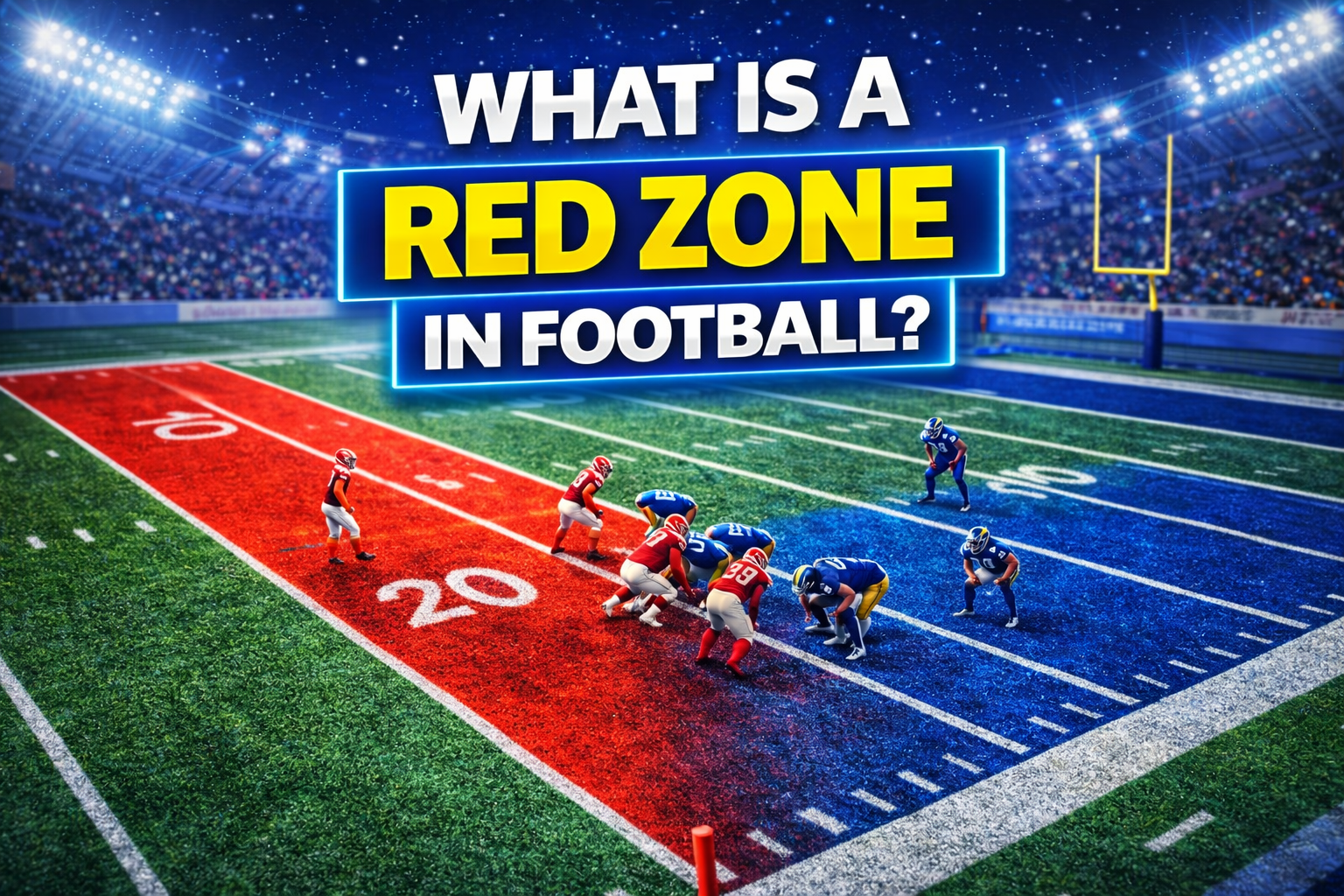
Football can look complicated to new viewers. There are downs, yard lines, penalties, and many strategic terms that commentators use without always explaining them. One phrase you’ll often hear during a game is “the red zone.” When an announcer says, “They’re now in the red zone,” the tone usually becomes more intense.
But what exactly does that mean?
Understanding the red zone is important because it represents one of the most critical areas of the field. Games are often decided by what teams do—or fail to do—inside this part of the field. Whether you are a new fan, a student learning the game, or someone who simply wants to follow conversations more confidently, this guide will explain the red zone clearly and step by step.
The Basic Definition of the Red Zone
In American football (also called gridiron football), the red zone refers to the area of the field between the opponent’s 20-yard line and the goal line.
In simple terms:
This area stretches 20 yards from the goal line. It doesn’t physically appear red on most fields during regular games. The name is symbolic, not literal. Some broadcasts may highlight it visually for viewers, but on the field itself, it’s just regular turf.
Why Is It Called the “Red” Zone?
The term “red zone” suggests danger and urgency. In many contexts, red represents warning or high alert. In football, the red zone signals:
- Increased scoring opportunity for the offense
- Increased defensive pressure
- Limited space for plays
- Higher stakes for every decision
It’s the part of the field where touchdowns become much more realistic—but also where mistakes become more costly.
Where Exactly Is the Red Zone?
Step 1: Understand the Field Layout
Yard lines are marked every 5 yards.
Step 2: Identify the Opponent’s 20-Yard Line
If a team is driving toward the north end zone, the red zone begins at the 20-yard line closest to that end zone.
Step 3: Measure Toward the Goal Line
From the 20-yard line to the goal line is 20 yards. That stretch is the red zone.
Once the ball crosses that 20-yard line, the offense has entered the red zone.
Why the Red Zone Matters So Much
The red zone changes the way football is played. Space becomes limited, and strategy becomes more precise.
1. The Field Gets Shorter
When an offense is at midfield, defenders must guard deep passes over a large area. But inside the red zone:
- The end zone acts like a wall.
- There’s no need to defend deep beyond the goal line.
- Defensive players can crowd receivers more tightly.
The reduced space changes everything.
2. Touchdowns Become More Likely
Statistically and logically, the closer a team gets to the end zone, the better their chance of scoring a touchdown.
From the red zone, teams only need 20 yards or less to score. That’s a much shorter distance than driving 80 or 90 yards.
3. Mistakes Become More Costly
In the red zone:
- A turnover (interception or fumble) wastes a major scoring opportunity.
- A penalty can push a team backward into a more difficult situation.
- Poor execution may force a team to settle for a field goal instead of a touchdown.
Games are often decided by red zone efficiency.
How Offenses Adjust in the Red Zone
Offensive strategy changes significantly once a team enters the red zone.
Shorter Passing Routes
With less space available:
- Quick slants
- Fade routes
- Crossing patterns
- Tight end seam routes
are commonly used. Long, deep throws are less frequent because there isn’t enough room.
Increased Use of the Running Game
Running plays often become more important:
- Power runs
- Quarterback sneaks
- Designed runs near the goal line
When only a few yards remain, running the ball can be more reliable than passing.
Play-Action and Deception
Because defenses expect short plays, offenses use deception:
- Fake handoffs
- Misdirection
- Quick screens
The goal is to confuse defenders in tight spaces.
How Defenses Adjust in the Red Zone
Defensive strategy also shifts dramatically.
Tighter Coverage
Defenders don’t have to worry about protecting deep space. This allows them to:
- Play closer to receivers
- Be more aggressive
- Focus on short routes
More Physical Play
The compressed field leads to more contact and tighter coverage. Defensive backs and linebackers must react quickly and decisively.
Goal-Line Defense
When the ball gets inside the 5-yard line, teams often switch to “goal-line defense,” which typically includes:
- Extra defensive linemen
- More focus on stopping runs
- Heavy pressure on the quarterback
Every inch matters near the goal line.
Red Zone Efficiency: What Does It Mean?
Commentators often talk about “red zone efficiency.”
This refers to how often a team scores touchdowns when they enter the red zone.
For example:
- If a team enters the red zone five times and scores four touchdowns, that’s strong efficiency.
- If they enter five times and only score one touchdown, that’s poor efficiency.
Field goals still count as points, but touchdowns are the ultimate goal. Teams that convert red zone trips into touchdowns usually win more games.
Red Zone vs. Goal Line: What’s the Difference?
Many people confuse the red zone with the goal line. They are not the same.
Red Zone
- Covers 20 yards of field.
Goal Line
- Crossing it with possession of the ball results in a touchdown.
You can be in the red zone without being near the goal line. For example, standing at the 18-yard line is red zone territory, but you are still 18 yards away from scoring.
College vs. Professional Football
The red zone concept is the same in:
- Professional football (such as the NFL)
- College football
The distance remains the same: 20 yards from the opponent’s goal line.
While some rules differ between levels of play, the definition of the red zone does not change.
Common Misunderstandings About the Red Zone
Let’s clear up some confusion.
Misunderstanding 1: The Field Is Painted Red
In most games, it is not. The name is symbolic.
Misunderstanding 2: You Automatically Score in the Red Zone
Being in the red zone does not guarantee points. Teams can:
- Miss field goals
- Turn the ball over
- Fail on fourth down
Misunderstanding 3: It Only Matters for Offense
The red zone is equally important for defense. A strong defense that prevents touchdowns in this area can change the outcome of a game.
Why Red Zone Performance Often Decides Games
Football games can be close. A difference of one touchdown can determine the winner.
Consider this simple comparison:
- Team A scores touchdowns on most red zone trips.
- Team B settles for field goals.
Even if both teams move the ball effectively between the 20-yard lines, Team A is likely to outscore Team B because touchdowns are worth more than field goals.
That’s why coaches emphasize red zone execution during practice.
Special Situations in the Red Zone
Turnovers
An interception in the red zone can completely shift momentum. The offense loses a scoring opportunity, and the defense gains possession.
Penalties
Holding or false start penalties can push a team backward, making scoring more difficult.
Time Management
Late in games, teams may manage the clock differently inside the red zone. Sometimes they intentionally delay scoring to prevent the opposing team from getting the ball back.
Practical Advice for New Fans
If you’re watching football and want to understand the game better, focus on these points when a team enters the red zone:
- Watch the formation. Are there more running backs or receivers?
- Notice defensive alignment. Are defenders crowding the line?
- Pay attention to play-calling. Is the team being aggressive or conservative?
- Observe decision-making on fourth down. Will they go for it or kick a field goal?
Following these details will help you appreciate the strategy behind each play.
Frequently Asked Questions (FAQs)
How many yards is the red zone?
It covers 20 yards, from the opponent’s 20-yard line to the goal line.
Does every league use the red zone?
Most levels of American football recognize this concept, especially professional and college football.
Why is scoring harder in the red zone?
Because the field is shorter. Defenders have less area to cover and can focus on stopping short, quick plays.
Can a team score from outside the red zone?
Yes. A team can score from anywhere on the field, including long passes or runs from midfield. The red zone simply increases scoring probability.
The Mental Pressure of the Red Zone
Beyond strategy, there’s also psychology involved.
Players know that:
- This is a prime scoring opportunity.
- Fans expect points.
- Coaches expect execution.
The pressure increases. Quarterbacks must make faster decisions. Receivers must run precise routes. Defensive players must avoid penalties.
Mental focus becomes just as important as physical ability.
How Coaches Prepare for Red Zone Situations
Coaches dedicate practice time specifically to red zone scenarios.
They rehearse:
- Short-yardage plays
- Two-point conversions
- Goal-line defense
- Clock management strategies
Because red zone situations are predictable parts of every game, preparation is essential.
Final Thoughts: Why Understanding the Red Zone Improves Your Football Knowledge
The red zone is more than just a section of the field. It represents a turning point in drives and often determines the outcome of games.
Inside those 20 yards:
- Space shrinks.
- Pressure increases.
- Strategy becomes more detailed.
- Execution becomes critical.
For new fans, recognizing when a team enters the red zone helps make sense of why commentators become more intense and why coaches seem more animated. It’s not just another yard marker—it’s a high-stakes area where games can be won or lost.
By understanding the red zone, you gain deeper insight into how football strategy works. The next time you hear an announcer say, “They’re in the red zone,” you’ll know exactly what that means—and why it matters.