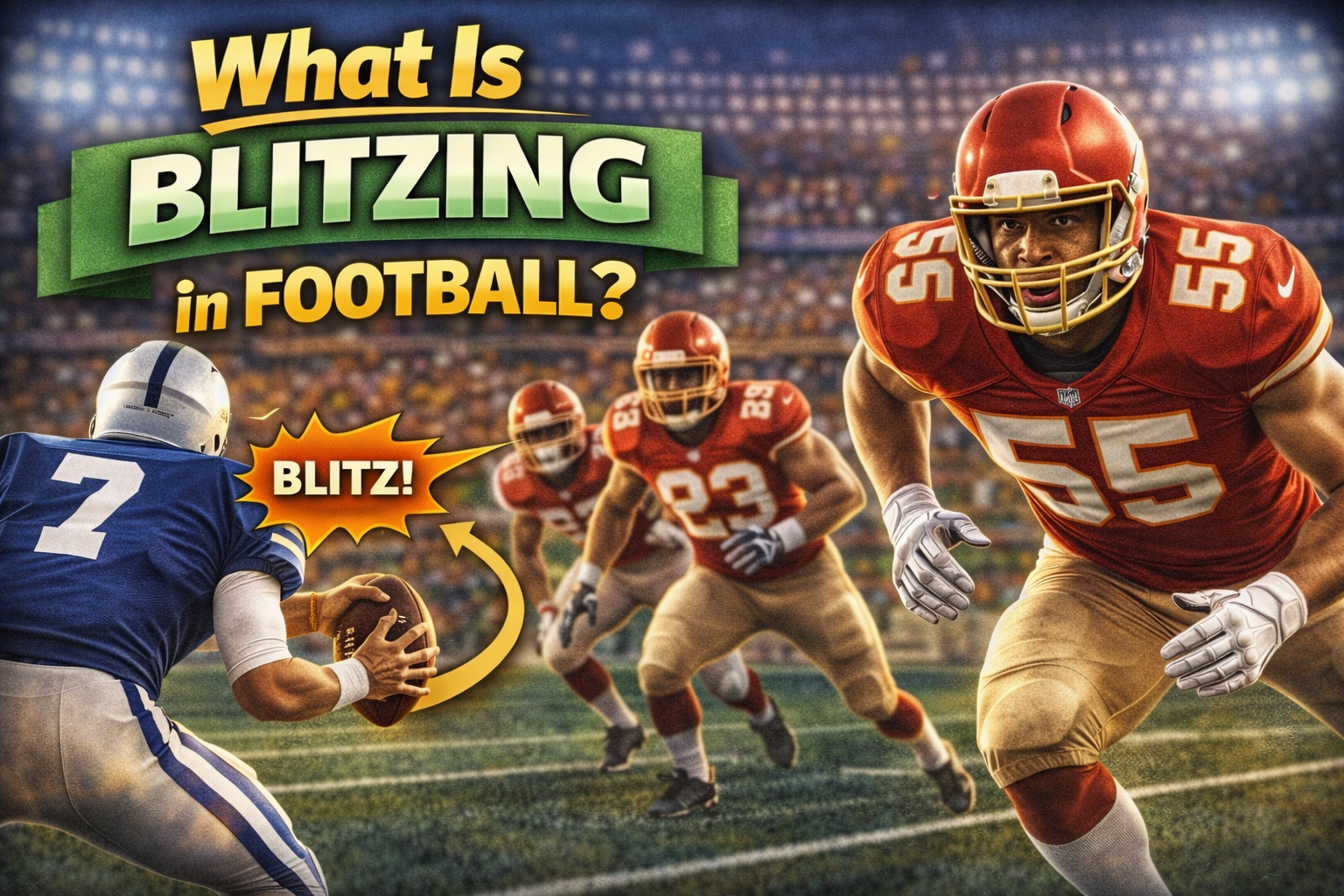
If you’ve ever watched a football game and heard an announcer shout, Why would a defense send extra players toward the quarterback and risk leaving receivers open? And how does blitzing actually work?
Understanding what blitzing is in football helps you see the strategy behind defensive play-calling. Blitzing isn’t just about speed or aggression—it’s about timing, pressure, and forcing the offense into mistakes. This article explains blitzing step by step, using clear language and real-game logic, so even readers with little football knowledge can follow along.
What Does Blitzing Mean in Football?
In football, blitzing refers to a defensive tactic where one or more players rush the quarterback instead of dropping back into coverage. These extra rushers are usually linebackers or defensive backs, rather than defensive linemen who rush by default.
The goal of a blitz is simple:
- Pressure the quarterback quickly
- Disrupt passing plays
- Force hurried decisions or mistakes
By sending additional defenders, the defense sacrifices some coverage in exchange for speed and pressure.
How a Standard Pass Rush Works
To understand blitzing, it helps to first understand a normal defensive pass rush.
Typical Pass Rush
In most defensive plays:
- Four defensive linemen rush the quarterback
- Linebackers and defensive backs focus on coverage
This balance allows the defense to pressure the quarterback while still protecting against passes.
How Blitzing Changes the Balance
When a defense blitzes:
- Five, six, or even more players rush the quarterback
- Fewer defenders remain in coverage
- The play becomes more aggressive and risky
Blitzing trades safety for disruption.
Why Defenses Use the Blitz
Blitzing isn’t random. Coaches call blitzes for specific reasons depending on the game situation.
Speeding Up the Quarterback
Quarterbacks are most dangerous when they have time. A blitz reduces that time, forcing quick throws.
Forcing Mistakes
Under pressure, quarterbacks may:
- Throw inaccurate passes
- Miss open receivers
- Take sacks
- Commit turnovers
Disrupting Offensive Rhythm
Even if a blitz doesn’t result in a sack, it can throw off timing and confidence.
Who Can Blitz?
Almost any defensive player can be part of a blitz.
Linebackers
Linebackers are the most common blitzers. They have the size to fight blockers and enough speed to reach the quarterback quickly.
Defensive Backs
Cornerbacks and safeties sometimes blitz, especially from the edge. These blitzes are harder to predict because defensive backs usually play coverage.
Combined Blitzes
Some blitzes involve multiple players from different positions attacking at once.
Types of Blitzes in Football
Blitzing isn’t a single strategy.
Linebacker Blitz
A linebacker rushes the quarterback instead of covering a zone or player. This is the most basic form of blitzing.
Safety Blitz
A safety attacks from deeper in the field, often catching the offense off guard.
Cornerback Blitz
A cornerback blitz comes from the outside and can be very effective if timed correctly.
Zone Blitz
This disguises pressure and confuses quarterbacks.
What Is a Zero Blitz?
A zero blitz is one of the most aggressive strategies in football.
How It Works
No deep coverage remains
Every receiver is covered one-on-one
Risk vs. Reward
A zero blitz can lead to:
- Quick sacks and turnovers
- Or, if beaten, big offensive plays
Coaches usually save zero blitzes for high-risk situations.
The Risks of Blitzing
While blitzing can be effective, it also comes with serious risks.
Fewer Defenders in Coverage
Sending extra rushers means fewer players defending receivers.
Vulnerability to Quick Passes
Short passes and screens are designed to beat blitzes.
Big Play Potential
If the quarterback escapes pressure, the defense may be exposed.
Because of these risks, blitzing must be timed and executed carefully.
How Offenses Counter Blitzes
Offenses are not helpless against blitzes. They prepare specific strategies to handle pressure.
Quick Passing Game
Fast throws reduce the time the blitz has to work.
Screen Plays
Screen passes let rushers through and attack the space they leave behind.
Extra Blockers
Tight ends or running backs may stay in to block.
A smart offense can turn a poorly timed blitz into a big gain.
Blitzing and Modern Football
As football has evolved, blitzing has become more complex.
Mobile Quarterbacks
Quarterbacks who can run add an extra challenge. Blitzing them incorrectly can open running lanes.
Spread Offenses
With more receivers on the field, defenses must choose carefully when to blitz.
Disguised Pressure
Modern defenses often disguise blitzes until the last second to confuse quarterbacks.
Blitzing today is as much about deception as it is about speed.
Common Misunderstandings About Blitzing
“Blitzing Means Everyone Rushes”
Not true. Blitzing usually involves one or two extra players, not the entire defense.
“Blitzing Always Leads to Sacks”
Many blitzes simply force quick throws or disrupt timing.
“Only Weak Teams Blitz”
Strong defenses blitz too. Blitzing is about strategy, not desperation.
When Is Blitzing Most Effective?
Blitzing works best in certain situations:
- Long-yardage passing downs
- Against inexperienced quarterbacks
- When the offense shows predictable patterns
Good defenses don’t blitz constantly—they blitz selectively.
How Fans Can Spot a Blitz During a Game
If you want to spot a blitz during a game:
- Watch linebackers creeping toward the line
- Notice defensive backs moving closer before the snap
- Look for unusual defensive alignments
Once you learn the signs, blitzes become easier to recognize.
Practical Advice for New Football Fans
When watching a game, don’t focus only on sacks. Pay attention to:
- How fast the quarterback throws
- Whether receivers have time to get open
- How the offense adjusts after pressure
Blitzing often affects plays even when it doesn’t show up in highlights.
Frequently Asked Questions About Blitzing
Is blitzing allowed on every play?
Yes, defenses can blitz on any play, though it’s not always smart.
Can blitzing stop the run?
Sometimes, but blitzing is mainly used to pressure the quarterback.
Do all teams blitz?
Yes, but each team uses blitzing differently based on personnel and philosophy.
Why Blitzing Is an Important Part of Football
Blitzing adds excitement, unpredictability, and strategy to football. It keeps offenses honest and forces quarterbacks to think quickly. Without blitzing, games would be slower and more predictable.
The key to blitzing isn’t aggression alone—it’s timing, disguise, and discipline.
Conclusion
So, what is blitzing in football? Blitzing is a defensive strategy where extra players rush the quarterback to create pressure and disrupt offensive plays. While it comes with risks, it can dramatically change the outcome of a game when used correctly.
Understanding blitzing helps fans appreciate the chess match between offense and defense. Every blitz is a calculated decision, balancing pressure against coverage. Once you recognize how and why teams blitz, football becomes not just a physical game, but a strategic one as well.


