Football has changed significantly over the years, especially on the defensive side of the ball. As offenses became faster, more creative, and more pass-focused, defenses had to adapt. One of the results of this evolution is a position that many fans hear about today but don’t always fully understand: the edge.
If you’ve ever wondered what an edge is in football, why the term exists, or how it differs from traditional positions like defensive end or linebacker, this article will walk you through everything step by step. By the end, you’ll have a clear, beginner-friendly understanding of the edge role and why it matters so much in modern football.
Understanding Football Positions in Simple Terms
Before diving into what an edge is, it helps to understand how football positions are usually defined. Traditionally, defensive players were grouped by where they lined up:
Linebackers lined up behind the defensive line.
Defensive backs covered receivers and played deeper in the field.
These labels worked well for decades. However, modern defenses don’t always fit neatly into these categories anymore. Some players line up in different spots depending on the situation, making old position names less precise.
What Does “Edge” Mean in Football?
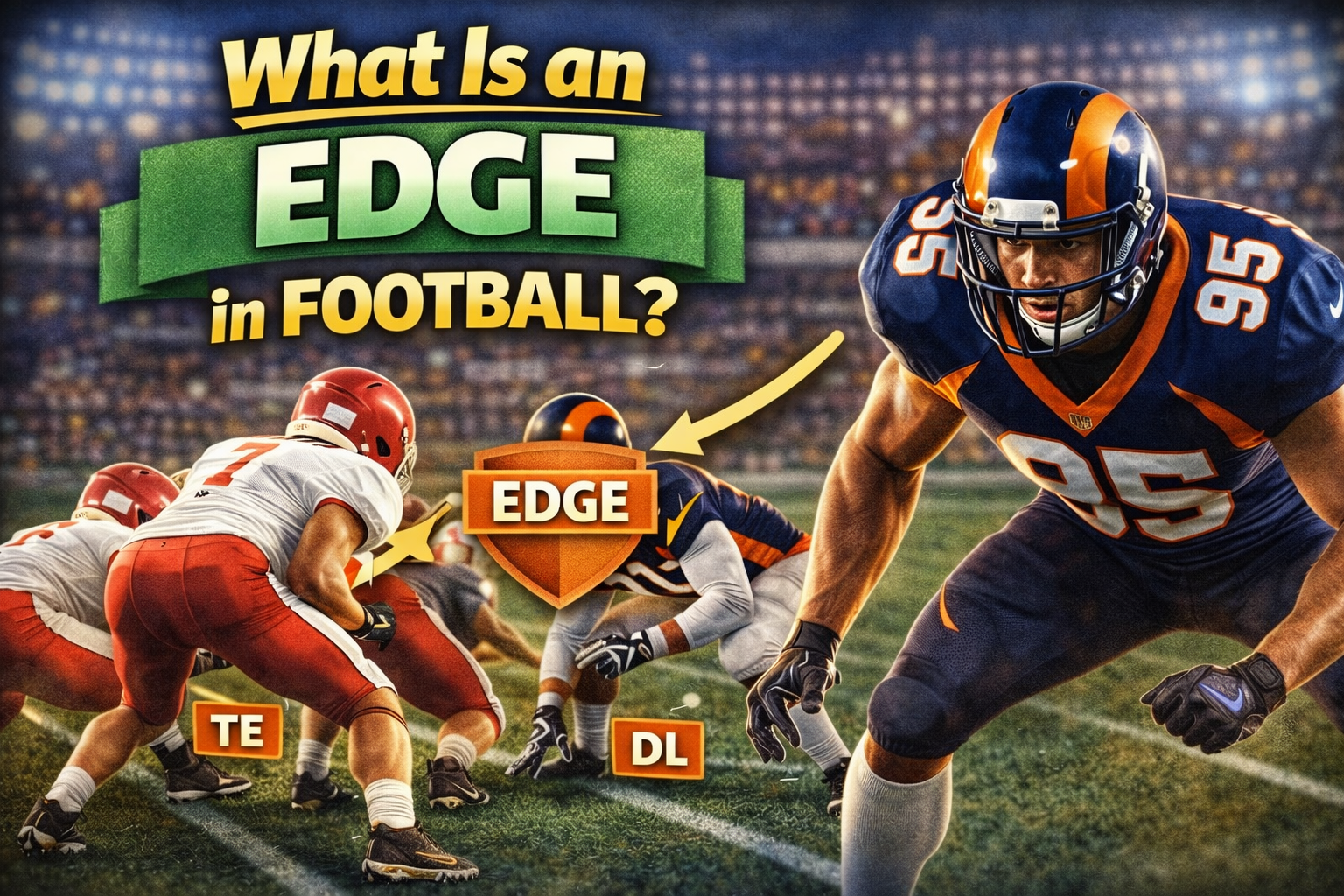
In football, the term edge refers to a defensive player whose primary responsibility is to control and attack the outside edge of the offensive formation. This usually means lining up on the outermost part of the defensive front, close to the offensive tackle or tight end.
An edge player is mainly responsible for:
- Pressuring the quarterback from the outside
- Preventing runs from bouncing to the outside
- Setting the boundary that keeps the play contained
Rather than being defined strictly as a defensive end or linebacker, an edge is defined by what the player does, not just where they stand.
Why the Edge Position Exists
The edge position exists because modern football demands flexibility. Offenses use spread formations, mobile quarterbacks, quick passes, and outside runs. Defenses needed players who could:
- Rush the passer
- Defend the run
- Drop into coverage occasionally
- Adjust to different offensive looks
Calling someone an “edge” allows coaches, analysts, and fans to describe a player’s role without limiting them to a traditional position label.
Where Does an Edge Line Up?
Edge players usually line up on the outside of the defensive formation, but their exact spot can change depending on the defensive scheme.
Common Edge Alignments
- Outside the offensive tackle
- Head-up on a tight end
- Slightly wider to create a better angle on the quarterback
Sometimes an edge player lines up with a hand in the dirt like a defensive lineman. Other times, they stand up like a linebacker. This flexibility is one of the key traits of the position.
Is the Edge Position Considered a Defensive End or a Linebacker?
The answer is: an edge can be either, depending on the defense.
In some systems:
- The edge player is a defensive end in a four-man front.
- In others, the edge is an outside linebacker in a three-man front.
What matters most is not the title, but the role. If the player’s main job is attacking the outside and affecting the quarterback, they are considered an edge.
Main Responsibilities of an Edge Player
Rushing the Passer
The most visible job of an edge player is pressuring the quarterback. Edge rushers use speed, strength, and technique to get around offensive tackles and disrupt passing plays.
Setting the Edge Against the Run
“Setting the edge” means holding position so running backs can’t escape to the outside. The edge player must stay disciplined, maintain leverage, and force the runner back toward the middle where help is waiting.
Reading the Play
Edge players must quickly diagnose whether a play is a run, pass, or option. Reacting too aggressively can open lanes for quarterbacks or running backs.
Occasional Coverage Duties
While not their main task, some edge players drop into coverage, especially in zone-based defensive schemes. This keeps offenses guessing and allows defenses to disguise pressure.
Skills Needed to Play Edge
Playing edge requires a rare combination of physical and mental abilities.
Physical Traits
- Quick first step
- Upper-body strength
- Balance and flexibility
- Stamina to handle repeated contact
Mental Skills
- Play recognition
- Timing the snap
- Understanding blocking schemes
- Discipline to avoid overcommitting
Because of these demands, effective edge players are among the most valuable defenders on the field.
How Edge Players Impact the Game
An effective edge can completely change how an offense operates. Quarterbacks may rush throws, running backs may hesitate, and offensive coordinators may adjust game plans to avoid that side of the field.
Even when edge players don’t record sacks or tackles, their presence alone can:
- Collapse the pocket
- Force rollouts
- Disrupt blocking assignments
- Create opportunities for teammates
Their impact often goes beyond what shows up on the stat sheet.
Common Misunderstandings About the Edge Position
Not exactly. While many edge players are defensive ends, the term includes players who line up as linebackers or move around the formation.
“Edge Players Only Rush the Quarterback”
Pass rushing is important, but edge players must also stop the run and maintain discipline.
“Edge Is an Official Position”
Edge is more of a role description than a formal roster position. Teams still list players as defensive ends or linebackers.
Edge vs. Interior Defensive Linemen
Their jobs include clogging gaps, stopping inside runs, and pushing the pocket from within.
Edge players, by contrast:
- Attack from the outside
- Rely more on speed and angles
- Face different blocking techniques
Edge Play in Different Levels of Football
Youth and High School Football
At lower levels, edge responsibilities are often simpler. Coaches emphasize containment and basic pass rush techniques rather than complex schemes.
College Football
College defenses often feature highly athletic edge players who are asked to rush, cover, and spy mobile quarterbacks.
Professional Football
At the highest level, edge players are specialists. Game plans often revolve around maximizing their impact while minimizing their weaknesses.
Practical Advice for Fans Trying to Identify Edge Players
If you’re watching a game and want to spot the edge player:
- Look at the defenders lined up farthest outside.
- Watch who consistently rushes from the edge on passing downs.
- Notice who forces runs back inside.
Understanding this role can make watching football more engaging, as you’ll start to see how much influence these players have on each snap.
Frequently Asked Questions About Edge Players
Do edge players always get sacks?
No. Their job is to pressure and disrupt, even if someone else finishes the play.
Can an edge player play multiple positions?
Yes. Many edge players switch between standing up and putting a hand on the ground.
Is edge a defensive or offensive role?
Edge refers to a defensive role.
Why the Edge Position Matters
As football continues to evolve, the edge role becomes even more important. With offenses spreading the field and quarterbacks becoming more mobile, defenses need players who can handle space, speed, and power all at once.
The term “edge” reflects how the game is played today—not locked into rigid position labels, but shaped by responsibilities and matchups.
Conclusion
So, what is an edge in football? Simply put, an edge is a defensive player whose main job is to control the outside of the line of scrimmage and disrupt plays before they develop. Whether rushing the quarterback, stopping outside runs, or forcing offenses to adjust, edge players play a critical role in modern defenses.
Understanding the edge position helps demystify today’s defensive schemes and gives fans a deeper appreciation for how much strategy goes into every snap. Once you know what to look for, you’ll never watch the edge of the line the same way again.


