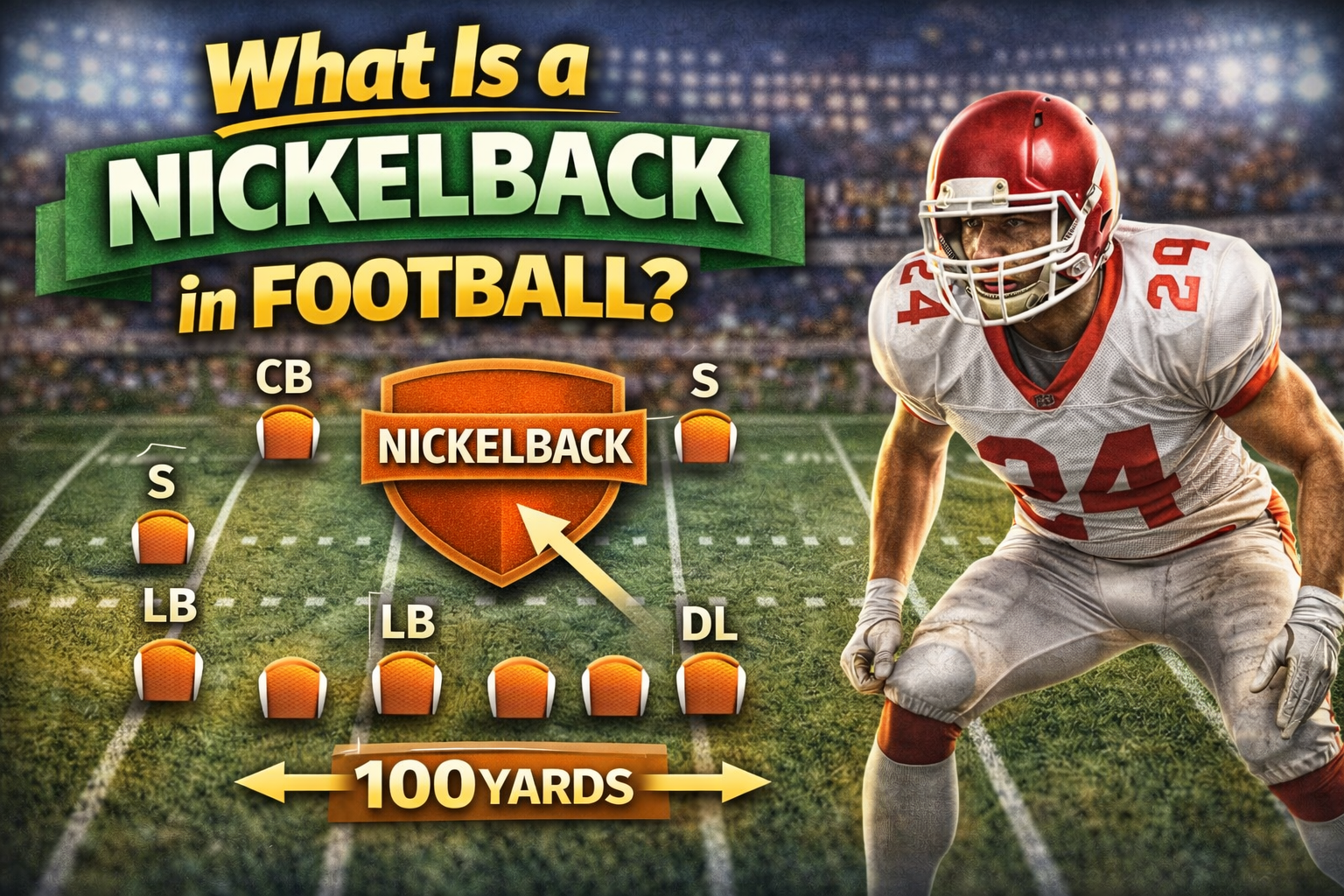
If you’ve watched football for any amount of time, you may have heard commentators mention a “nickelback” during passing situations. For new fans, the term can sound confusing or even misleading. Is it a specific player? A formation? A strategy?
Understanding what a nickelback is in football helps explain how defenses adapt to modern offenses. As the game has become faster and more pass-heavy, defenses have been forced to evolve. The nickelback position exists because offenses no longer rely solely on two wide receivers and a running game. Instead, teams spread the field, use slot receivers, and attack mismatches in space.
This article explains the nickelback position clearly and thoroughly. It breaks down what a nickelback does, why teams use one, how the role differs from other defensive backs, and why the position has become essential in today’s football landscape. No prior football knowledge is required.
The Simple Definition of a Nickelback
In football, a nickelback is a fifth defensive back added to the field in place of a linebacker when a defense expects a passing play.
The term comes from the word “nickel,” meaning five cents, which reflects the five defensive backs on the field. In a standard defensive setup, there are usually four defensive backs. When a nickelback enters the game, the defense shifts into a nickel defense, featuring five defensive backs instead of four.
Understanding a Standard Defensive Formation
To understand the nickelback, it helps to know what a normal defensive lineup looks like.
Base Defense: Four Defensive Backs
Most traditional defenses use:
- 2 cornerbacks
- 2 safeties
This setup works well against balanced offenses that run the ball often and use fewer wide receivers.
Why the Base Defense Isn’t Always Enough
Modern offenses frequently use:
- Three or more wide receivers
- Slot receivers who line up inside
- Quick passes and short routes
Against these formations, a standard defense can struggle. Linebackers are often too slow to cover receivers, while safeties may be positioned too far back. This is where the nickelback comes in.
What Is the Nickel Defense?
The nickel defense is a defensive package that includes:
- 5 defensive backs
- 2 linebackers
- 4 defensive linemen (in most cases)
The extra defensive back is the nickelback. This formation is primarily used to defend against passing plays.
Where Does the Nickelback Line Up?
Typical Positioning
The nickelback usually lines up:
- Near the slot receiver
- Inside the cornerbacks
Because slot receivers run quick routes and operate in tight spaces, the nickelback must be agile, aware, and able to react quickly.
Flexibility in Alignment
Depending on the play call, a nickelback may:
- Cover a receiver in man coverage
- Drop into zone coverage
- Blitz the quarterback
- Help defend the run
This versatility is one of the reasons the position is so valuable.
What Role Does a Nickelback Play During a Game?
The nickelback has a demanding role with multiple responsibilities.
Pass Coverage
The primary job of a nickelback is to cover receivers, especially slot receivers. These receivers often:
- Run short, fast routes
- Change direction quickly
- Create mismatches against linebackers
A good nickelback must be able to mirror these movements and prevent easy completions.
Run Support
Although the nickel defense is designed to stop the pass, nickelbacks are also expected to:
- Read running plays
- Tackle ball carriers
- Set the edge when needed
This means they must be willing and able to play physically despite being smaller than linebackers.
Blitzing the Quarterback
Nickelbacks are sometimes used as blitzers. Because they line up closer to the line of scrimmage, they can:
- Attack from unexpected angles
- Disrupt timing
- Force quick throws
This adds another layer of unpredictability to the defense.
How Does a Nickelback Compare to a Traditional Cornerback?
While nickelbacks and cornerbacks are both defensive backs, their roles are not identical.
Outside Cornerbacks
Outside cornerbacks typically:
- Cover the team’s top wide receivers
- Line up near the sidelines
- Focus on longer routes
Nickelbacks
Nickelbacks:
- Cover slot receivers
- Operate in the middle of the field
- Defend shorter, quicker routes
- Face more traffic and congestion
Because of this, the nickelback role often requires:
- Faster reaction time
- Strong tackling ability
- High football awareness
How Does a Nickelback Differ from a Safety?
Safeties
Safeties generally:
- Play deeper in the field
- Provide help over the top
- Read the quarterback
- Prevent big plays
Nickelbacks
Nickelbacks:
- Play closer to the line of scrimmage
- Match up directly with receivers
- Engage more frequently in one-on-one coverage
In some cases, a safety may be used as a nickelback, but the responsibilities remain different from traditional safety play.
Why the Nickelback Position Exists
The nickelback position exists because football has changed.
Evolution of Offensive Strategy
Modern offenses rely heavily on:
- Passing the ball
- Spreading the defense
- Creating mismatches in space
As a result, defenses needed a player who could:
- Cover like a cornerback
- Tackle like a linebacker
- Think like a safety
The nickelback fills that role.
Frequency of Nickel Defense
In today’s game, many teams use the nickel defense on more than half of all defensive snaps. This makes the nickelback one of the most-used defenders on the field, even if the position doesn’t always get the spotlight.
Skills Required to Be a Good Nickelback
Playing nickelback is not easy. The position demands a unique skill set.
Speed and Agility
Nickelbacks must:
- Change direction quickly
- Keep up with fast receivers
- React instantly to route breaks
Football Intelligence
Because the nickelback operates in the middle of the field, they must:
- Read offensive formations
- Recognize route combinations
- Anticipate plays before they develop
Tackling Ability
Nickelbacks are often involved in:
- Open-field tackles
- Stopping short passes
- Defending runs to the outside
Missed tackles can quickly turn short gains into big plays.
Versatility
A good nickelback can:
- Cover different types of receivers
- Play zone or man coverage
- Blitz when needed
- Adjust to motion and shifts
Common Misunderstandings About Nickelbacks
“Nickelbacks Are Backup Players”
This is not true. Nickelbacks often play starter-level snaps and face some of the most dangerous offensive players.
Nickel Defense Is Only for Passing Downs”
While commonly used on passing downs, nickel defenses are sometimes used against balanced offenses or even run-heavy teams that spread the field.
Any Cornerback Can Play Nickel”
Not all cornerbacks are suited for the nickel role. Some lack the tackling ability or quick decision-making needed to succeed inside.
Nickelback vs. Dimeback: What’s the Difference?
When defenses add even more defensive backs, they use a dime defense.
Nickel Defense
- 5 defensive backs
- 2 linebackers
Dime Defense
- 6 defensive backs
- 1 linebacker (or sometimes none)
The nickelback is still present in dime defenses, but the responsibilities may shift slightly depending on the alignment.
How Nickelbacks Impact the Game
Nickelbacks influence games in subtle but important ways.
Limiting Short Passes
By covering slot receivers effectively, nickelbacks:
- Disrupt timing routes
- Force quarterbacks to hold the ball longer
- Reduce easy completions
Supporting Defensive Flexibility
Nickelbacks allow defenses to:
- Disguise coverages
- Adjust to offensive motion
- Match personnel without substituting frequently
This flexibility is critical in fast-paced games.
Practical Advice for New Football Fans
If you’re learning football, here’s how to spot the nickelback during a game:
- Look for a defender lined up across from a slot receiver
- Notice when a linebacker leaves the field for a defensive back
- Watch who covers receivers inside rather than on the sidelines
Once you identify the nickelback, you’ll start to see how often the position is involved in key plays.
Frequently Asked Questions
Is the nickelback always a defensive back?
Yes, the nickelback is always a defensive back, though their exact position may resemble a hybrid role.
Can a team use more than one nickelback?
No, by definition there is only one nickelback. Adding more defensive backs changes the formation to dime or quarter defenses.
Is the nickelback position new?
The concept has existed for decades, but its importance has grown significantly in modern football.
Conclusion: Why the Nickelback Is Essential in Modern Football
So, what is a nickelback in football? Simply put, it is the fifth defensive back who helps a defense handle today’s pass-heavy offenses. But in practice, the role is far more complex.
Nickelbacks must combine speed, intelligence, toughness, and versatility. They cover some of the quickest players on the field, operate in the most crowded areas, and often determine whether a defense succeeds or fails on key downs.
As football continues to evolve, the nickelback is no longer a situational player—it is a foundational role. Understanding this position gives fans deeper insight into defensive strategy and helps explain why modern defenses look the way they do.
Once you know what to watch for, you’ll realize just how often the nickelback is at the center of the action.


