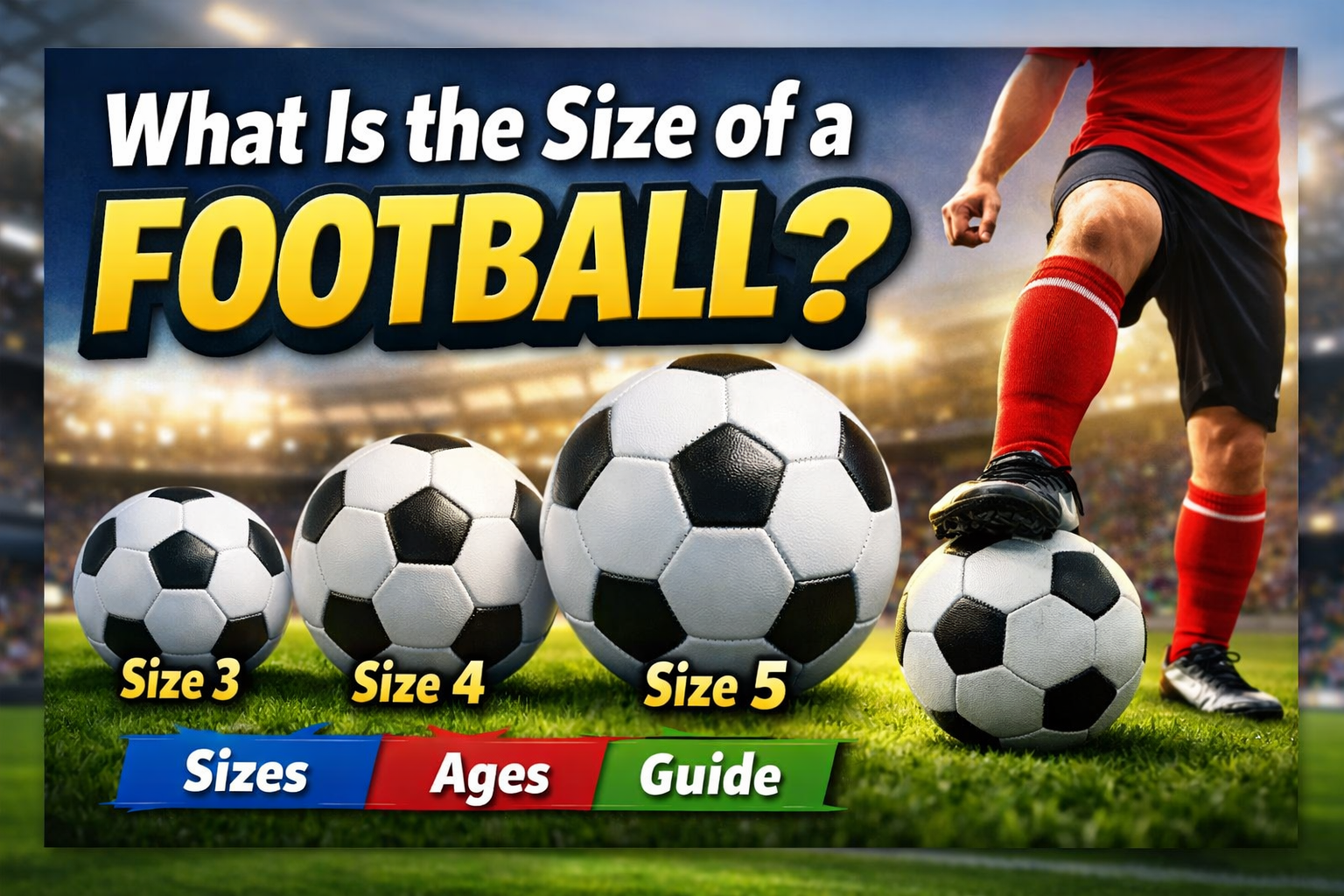
Honestly, this sounds like a simple question… until you actually need to buy a football.
You go online, see Size 3, Size 4, Size 5, different weights, different ages, training balls, match balls — and suddenly you’re confused. I’ve been there. Many parents, coaches, and beginners pick the wrong ball, and it quietly affects skills, confidence, and even enjoyment.
So let’s clear this up properly.
In this guide, I’ll explain football sizes in plain English, show who should use which size, share real-life tips, and cover the stuff most articles forget to mention. Think of this as the last football size guide you’ll ever need.
Table of Contents
ToggleWhat Does “Football Size” Actually Mean?
A football’s size is based on two main things:
-
Circumference (how big it is around)
-
Weight (how heavy it feels when kicked)
These measurements are set by football authorities so the game stays fair and consistent worldwide.
The truth is, size matters more than people think. A ball that’s too big or heavy can slow skill development. One that’s too small won’t prepare you for real matches.
Standard Football Sizes Explained (Simple Breakdown)
There are five common football sizes, but only three are used regularly in matches.
Football Size Chart (Quick View)
| Football Size | Age Group | Circumference | Weight | Common Use |
|---|---|---|---|---|
| Size 1 | All ages | Very small | Light | Skills, souvenirs |
| Size 3 | Under 8 | Small | Light | Kids training |
| Size 4 | 8–12 years | Medium | Medium | Youth matches |
| Size 5 | 13+ years | Full size | Heaviest | Official matches |
Size 5 Football (Official Match Ball)
This is the standard football size.
If you watch professional football, this is the ball they use.
Key Facts
-
Used by players aged 13 and above
-
Same size for men and women
-
Used in professional, amateur, and international matches
In my experience, beginners sometimes jump straight to Size 5 too early. That makes control harder and slows learning. Bigger isn’t always better.
Size 4 Football (Best for Skill Development)
Size 4 is honestly the most underrated football size.
Why Size 4 Is Important
-
Perfect for ages 8 to 12
-
Helps develop:
-
Ball control
-
Passing accuracy
-
First touch
-
Many coaches even use Size 4 for technical drills with older players because it improves close control. Here’s the part no one talks about — smaller balls force better technique.
Size 3 Football (For Young Kids)
Size 3 is designed for young children, not just smaller feet.
Best For
-
Kids under 8 years old
-
First-time players
-
Fun, confidence-building play
A lighter ball means fewer missed kicks, fewer falls, and way more smiles. Think about this — a child who enjoys football early is more likely to stick with it.
Size 1 Football (Mini & Skills Ball)
Size 1 footballs are not for matches.
They’re mainly used for:
-
Footwork training
-
Balance drills
-
Indoor practice
-
Decoration or gifts
Many pro players train with Size 1 balls to sharpen touch. It’s tough at first, but it works.
Does Football Size Affect Performance?
Short answer: Yes, a lot.
Using the wrong size can cause:
-
Poor ball control
-
Incorrect kicking technique
-
Faster fatigue
-
Loss of confidence (especially in kids)
Most blogs just list sizes, but let’s focus on what actually works. Match the ball to the player’s age and strength — not ego.
Football Size vs Weight (Why Weight Matters Too)
Two balls can be the same size but feel totally different.
Lighter Balls
-
Better for kids
-
Safer for headers
-
Easier to control
Heavier Balls
-
Travel faster
-
Feel more powerful
-
Used in official matches
As of 2025, training balls often come slightly lighter than match balls to reduce injury risk during practice. That’s a smart move, especially for youth football.
Indoor, Futsal & Street Football Sizes
Here’s something competitors rarely explain clearly.
-
Futsal balls are usually Size 4
-
They are heavier and less bouncy
-
Designed for control on hard surfaces
Street footballers often prefer Size 4 too because it stays closer to the feet.
How to Choose the Right Football (Step-by-Step)
If you’re buying a football today, do this:
-
Check the player’s age
-
Decide the playing surface (grass, turf, indoor)
-
Choose training or match ball
-
Confirm size and weight
-
Test grip and material if possible
In my experience, spending a little extra on the right size saves money long-term because the ball lasts longer and performs better.
Common Football Size Myths (Busted)
Myth: Adults should always use Size 5
Truth: Size 4 is better for skill drills
Myth: Heavier balls improve power
Truth: Technique matters more than weight
Myth: Kids will “grow into” big balls
Truth: Wrong size slows learning
FAQs – People Also Ask
What size football do professionals use?
Professionals use Size 5 footballs in all official matches.
Is football size different for women?
No. Women’s football also uses Size 5.
Can adults train with Size 4?
Yes, and many coaches recommend it for improving touch and control.
What football size is best for beginners?
Kids should start with Size 3, teens with Size 4, adults with Size 5.
Does football size change by country?
No. Sizes are standardized globally.
Final Thoughts: So, What Is the Size of a Football?
The “right” football size depends on who is playing and why.
-
Kids learn better with smaller balls
-
Youth players grow faster with Size 4
-
Adults compete with Size 5
The real goal isn’t just playing football — it’s enjoying it, improving skills, and staying injury-free.
This article will be updated regularly with new insights as rules, materials, and training methods evolve.


