What Is a Cricket’s Lifespan?
Crickets are small insects known for their chirping sounds and nighttime activity. They are commonly found in gardens, fields, forests, and sometimes inside homes. While many people recognize their sound, fewer understand how long crickets actually live or what affects their lifespan.
Some crickets survive only a few weeks, while others can live for several months under the right conditions. Understanding their life cycle helps explain why crickets appear more often during certain seasons and why they sometimes disappear quickly.
This article explains the lifespan of crickets in a simple and practical way, including how they grow, reproduce, survive, and eventually die.
Understanding the Cricket Life Cycle
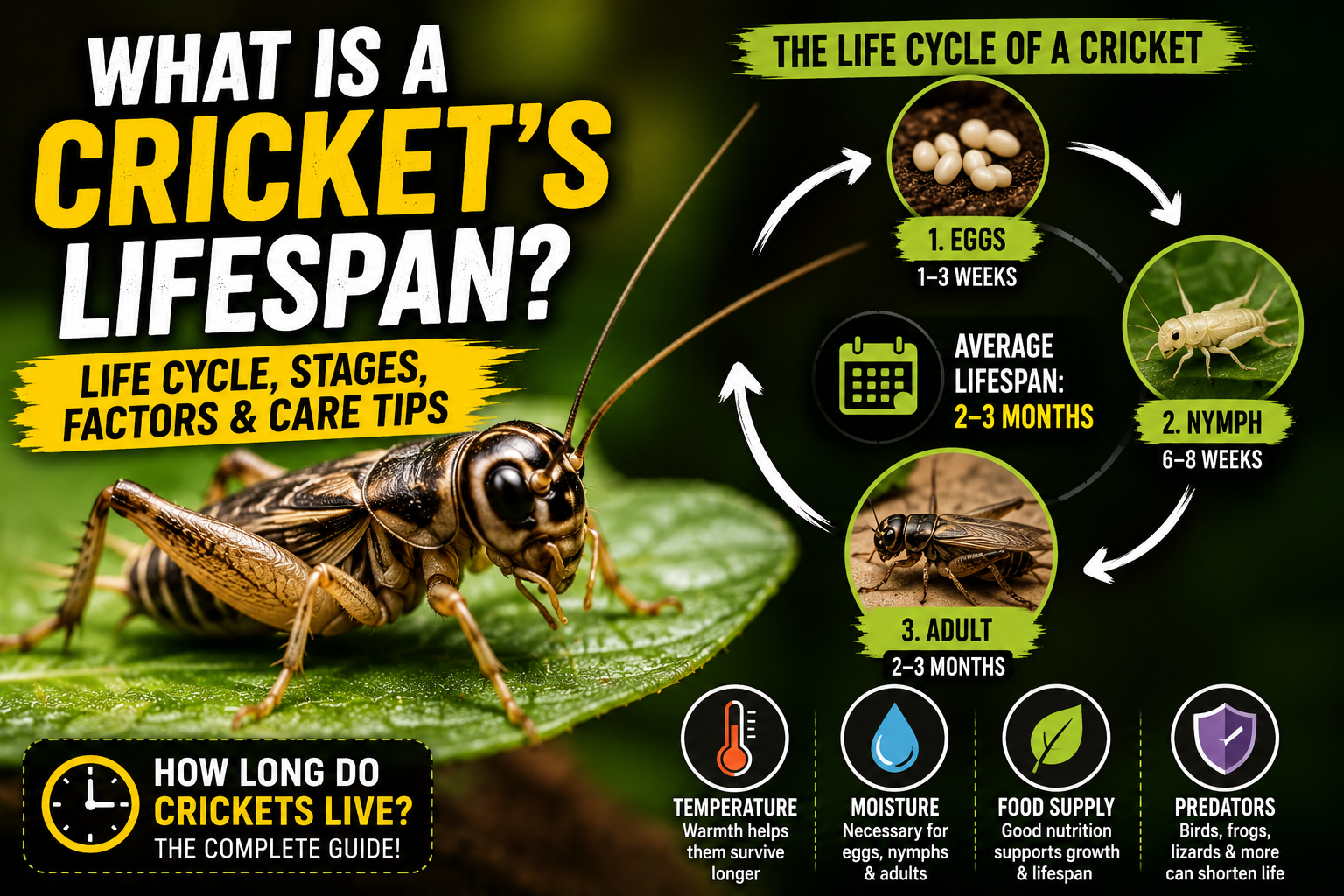
Crickets go through three main life stages:
- Egg
- Nymph
- Adult
Unlike butterflies or beetles, crickets do not go through a complete metamorphosis. They gradually grow into adults through a process called incomplete metamorphosis.
Each stage affects how long the cricket survives overall.
The Egg Stage
A female cricket lays eggs in soft soil, grass, cracks, or damp areas. Depending on the species and environmental conditions, she may lay hundreds of eggs during her lifetime.
The eggs usually remain hidden and protected until they hatch.
How Long Do Cricket Eggs Last?
Cricket eggs generally hatch within:
- One to three weeks in warm weather
- Longer in cooler temperatures
. Moisture and temperature are extremely important during this stage.
If conditions become too dry or too cold, many eggs may not survive.
The Nymph Stage
Once the eggs hatch, baby crickets emerge as nymphs. Nymphs look similar to adult crickets but are smaller and do not yet have wings.
At this stage, they begin feeding immediately and grow by shedding their outer skin multiple times. This process is called molting.
Growth During the Nymph Stage
Nymphs continue developing for several weeks. During this period, they:
- Eat frequently
- Avoid predators
- Search for shelter
- Grow larger after each molt
ir bodies harden.The nymph stage usually lasts between six and eight weeks, although this can vary depending on climate and food availability.
The Adult Stage
After the final molt, the cricket becomes a fully developed adult. Adult crickets can reproduce and are responsible for the chirping sounds people hear at night.
Male crickets produce chirping noises by rubbing their wings together. They use these sounds to attract females and establish territory.
How Long Do Adult Crickets Live?
Most adult crickets live for:
- Two to three months on average
- Sometimes longer in protected indoor conditions
Wild crickets often face threats from predators, weather changes, and lack of food, which can shorten their lifespan considerably.
Indoor crickets sometimes survive longer because temperatures remain stable and predators are limited.
Not all crickets live for the same amount of time.
House Crickets
House crickets commonly live for about two to three months. They adapt well to warm indoor spaces and can survive longer if food and water are available.
Field Crickets
Field crickets usually have shorter adult lives because outdoor conditions are harsher. Many survive only several weeks after reaching adulthood.
Camel Crickets
Camel crickets prefer damp and dark environments like basements or crawl spaces. Their lifespan can vary, but many live several months under stable conditions.
Factors That Affect a Cricket’s Lifespan
Several environmental and biological factors influence how long a cricket survives.
Temperature
Crickets thrive in warm conditions. Their metabolism slows in cold weather, reducing movement and growth.
Very low temperatures can kill crickets quickly, especially adults.
Warm temperatures generally increase activity and feeding, but excessive heat without moisture can also shorten lifespan.
Food Availability
Crickets are opportunistic feeders. They eat:
- Plant material
- Fungi
- Decaying organic matter
- Small insects
- Pet food scraps
A steady food supply improves survival rates and supports growth during the nymph stage.
Without enough food, crickets weaken and become more vulnerable to disease and predators.
Water and Moisture
Crickets need moisture to survive, although they do not drink large amounts of water like larger animals.
Dry conditions can lead to dehydration, especially in young nymphs and eggs.
Predators
Many animals feed on crickets, including:
- Birds
- Frogs
- Lizards
- Spiders
- Small mammals
Predation is one of the main reasons wild crickets rarely reach their maximum possible lifespan.
Indoor vs Outdoor Lifespan
Indoor crickets often live longer because they avoid many natural dangers. However, indoor environments can also create problems if there is not enough food or moisture.
Outdoor crickets experience:
- Weather changes
- Seasonal temperature drops
- Natural predators
- Competition for food
Because of these conditions, outdoor crickets usually have shorter and less predictable lifespans.
Common Misunderstandings About Cricket Lifespan
“Chirping Means a Cricket Is Old”
Chirping does not indicate age. Adult male crickets chirp to attract mates regardless of whether they recently matured or are nearing the end of life.
“All Crickets Have the Same Lifespan”
Different species have different survival patterns. Environment also plays a major role in determining lifespan.
Practical Advice for People Keeping Crickets
Some people keep crickets as feeder insects for reptiles, while others raise them for observation or breeding.
Provide Proper Temperature
Warm environments help crickets remain active and healthy. Extremely cold temperatures reduce survival.
Avoid Overcrowding
Too many crickets in one container can increase stress, disease, and cannibalism.
Supply Food and Moisture
Fresh vegetables, grains, and moisture sources help maintain healthy crickets.
Keep the Habitat Clean
Dirty environments encourage bacteria and mold growth, which can shorten lifespan.
Frequently Asked Questions
Do Crickets Die After Mating?
Not immediately. Adult crickets may continue living for some time after reproduction.
Can Crickets Survive Winter?
Some adult crickets die before winter, but eggs often survive until spring.
Why Do Crickets Suddenly Disappear?
Seasonal temperature changes and natural life cycles usually explain sudden population declines.
Conclusion
A cricket’s lifespan may seem short compared to larger animals, but these insects go through a surprisingly detailed life cycle. From egg to nymph to adult, every stage depends heavily on environmental conditions such as temperature, moisture, food, and safety from predators.
Most crickets live for several weeks to a few months, although indoor conditions can sometimes extend their survival. Their short lives are closely tied to seasonal changes and natural ecosystems.
Understanding how long crickets live helps explain their behavior, population patterns, and role in nature. Whether you hear them chirping outdoors at night or notice them indoors during colder months, crickets are more complex and adaptable than many people realize.