When it comes to protecting a home, most people focus on visible elements like shingles, gutters, or flashing. However, some of the most important features are the ones that go unnoticed. A chimney cricket is one such feature—small in size, but critical in function.
If your home has a chimney, the area where it meets the roof is one of the most vulnerable points for water damage. Rainwater, snow, and debris naturally collect behind the chimney, and without proper drainage, this buildup can lead to leaks and long-term structural issues. A chimney cricket is designed specifically to prevent these problems.
Understanding what a chimney cricket is and how it works can help homeowners avoid costly repairs and make better decisions about roof maintenance.
What Is a Chimney Cricket?
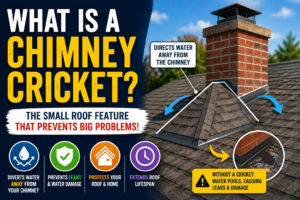
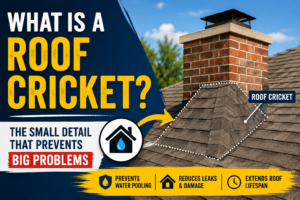
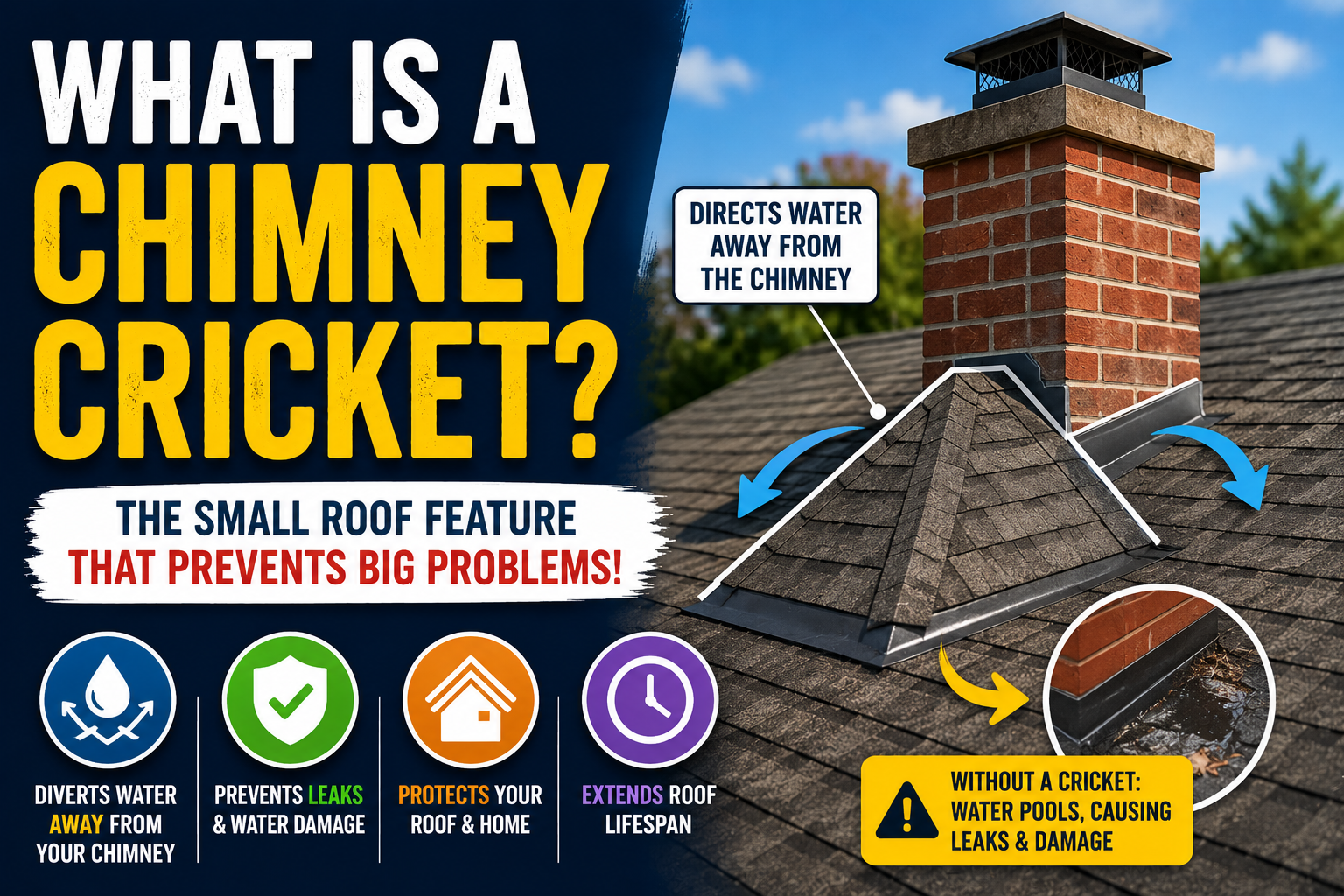
A chimney cricket is a peaked or ridge-like structure installed on the roof just behind a chimney. Its purpose is to divert water away from the back side of the chimney and guide it toward the sides of the roof.
In simple terms, it acts like a small roof that sits behind the chimney. Instead of allowing water to collect in that area, it splits the flow and directs it safely around the chimney.
Why Is a Chimney Cricket Important?
Water is one of the biggest threats to any roofing system, and chimneys create a natural obstacle that disrupts water flow.
Key Reasons Chimney Crickets Matter
1. Prevents Water Pooling
Without a cricket, water can gather behind the chimney, especially during heavy rain or snow. This standing water increases the risk of leaks.
2. Reduces Leak Risk
The area where the chimney meets the roof includes joints and seams. These are naturally weaker points where water can seep in. A cricket helps keep water moving away from these areas.
3. Protects Roof Materials
Constant exposure to moisture can damage shingles, underlayment, and even the wooden structure beneath the roof.
4. Minimizes Debris Buildup
Leaves, dirt, and other debris often collect behind chimneys. A cricket helps prevent this by keeping water—and debris—moving.
How a Chimney Cricket Works
A chimney cricket works by creating a sloped surface that redirects water flow.
Step-by-Step Process
- Rainwater flows down the roof due to gravity.
- When it reaches the chimney, the vertical structure blocks the natural path.
- The cricket, positioned behind the chimney, divides the water flow.
- Water is redirected to both sides of the chimney.
- It continues downward toward gutters or drainage areas.
This simple redirection prevents water from sitting in one place.
When Is a Chimney Cricket Needed?
Not every chimney requires a cricket, but many do—especially depending on size and roof design.
Common Situations Where Crickets Are Recommended
- Wide chimneys: Larger chimneys block more water flow
- Low-slope roofs: Water moves more slowly, increasing pooling risk
- Heavy rainfall or snowfall areas: More water means higher risk
- Roof replacements or new construction: Ideal time to install one
General Rule
If a chimney is wide enough to interrupt water flow significantly, adding a cricket is usually a smart decision.
Types of Chimney Crickets
Chimney crickets can vary based on the roofing system and materials used.
1. Framed Crickets
These are built using wood framing and then covered with roofing materials like shingles or metal.
- Common in residential homes
- Strong and long-lasting
- Custom-built to fit the chimney
2. Metal Crickets
Made entirely of metal, these are often used in combination with metal roofing systems.
- Durable and weather-resistant
- Requires precise installation
3. Tapered Crickets (for Flat Roofs)
Used on low-slope or flat roofs, these are built using insulation materials to create a gentle slope.
- Common in commercial buildings
- Integrated into the roof system
Common Misunderstandings About Chimney Crickets
“Flashing Is Enough”
Flashing helps seal the area around the chimney, but it doesn’t solve the problem of water pooling. A cricket addresses water flow, which flashing alone cannot do.
“They’re Only Needed for Large Buildings”
Chimney crickets are common in residential homes as well, especially when chimneys are wide.
“They’re Optional”
While not always required by building codes in every situation, skipping a cricket can lead to avoidable problems over time.
Installation Overview
Installing a chimney cricket is typically done during roof construction or replacement.
Basic Installation Steps
- Measure the chimney and surrounding area
- Design the slope to ensure proper water flow
- Build the frame (for pitched roofs)
- Install underlayment for waterproofing
- Apply roofing materials to match the roof
- Seal all joints and edges carefully
Because precision is important, installation is usually handled by experienced roofing professionals.
Signs You May Need a Chimney Cricket
If your roof doesn’t already have a cricket, certain signs may indicate it’s needed.
Warning Signs
- Water stains near the chimney inside the house
- Visible debris buildup behind the chimney
- Repeated leaks in the same area
- Standing water after rain
These signs suggest that water is not draining properly.
Practical Advice for Homeowners
Taking a proactive approach can help prevent damage and extend the life of your roof.
What You Can Do
1. Inspect Your Roof Regularly
Check the area around your chimney, especially after heavy rain.
2. Keep the Area Clean
Remove leaves and debris that could block water flow.
3. Ask During Roof Work
If you’re replacing your roof, ask whether a cricket is necessary.
4. Don’t Ignore Small Leaks
Even minor leaks near a chimney can point to a drainage issue.
FAQs About Chimney Crickets
Do all chimneys need a cricket?
No, smaller chimneys may not require one. However, larger chimneys often benefit from it.
Can a chimney cricket be added later?
Yes, it can be installed during a roof repair or upgrade.
Does it change the look of the roof?
Slightly, but it usually blends in with the roof design and is not very noticeable.
Conclusion
A chimney cricket may seem like a minor detail, but it plays a major role in protecting your home from water damage. By directing water away from one of the most vulnerable areas of the roof, it helps prevent leaks, structural issues, and costly repairs.
For homeowners, understanding this feature is part of understanding how a roof functions as a whole. Paying attention to these small but essential components can make a significant difference in maintaining a safe and durable home over time.