What Is a Cricket Ball Made Of?
Cricket is a sport built on precision, skill, and equipment that can withstand intense play. Among all the gear used in the game, the cricket ball is one of the most important pieces. Its weight, shape, hardness, and surface all affect how the game is played. Fast bowlers rely on swing and seam movement, spin bowlers depend on grip, and batters react to bounce and pace. All of these factors are influenced by how the ball is made.
Many people see a cricket ball as just a hard red or white ball, but its construction is actually detailed and carefully controlled. Every layer has a purpose, from the cork center to the stitched leather cover. Understanding what a cricket ball is made of helps explain why it behaves differently from balls used in other sports.
The Main Parts of a Cricket Ball
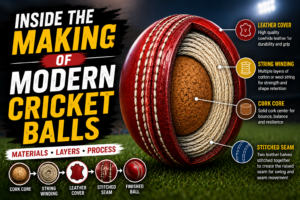
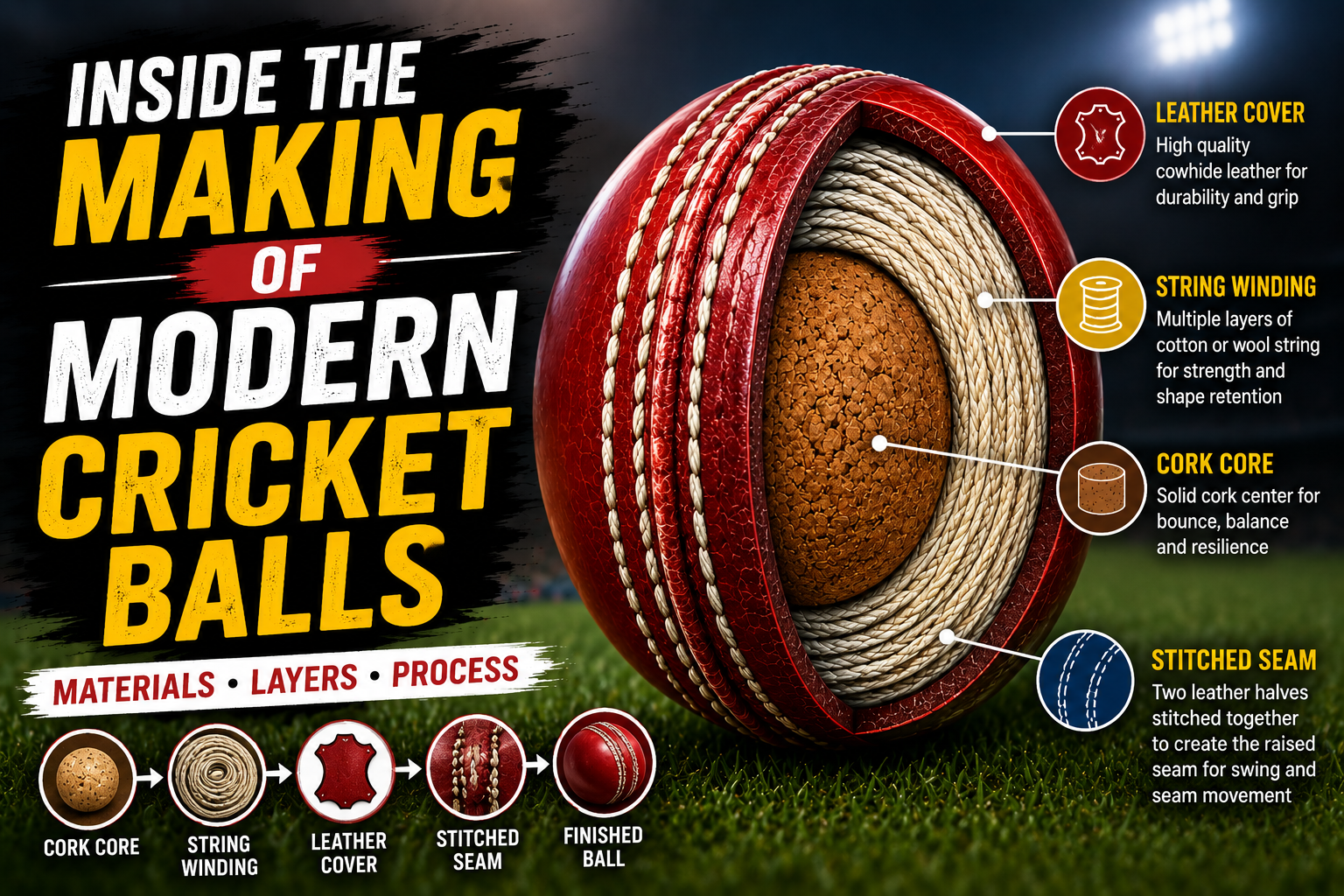
A traditional cricket ball is made from four main components:
- The cork core
- Layers of string winding
- A leather outer cover
- Raised stitching called the seam
Each part contributes to the ball’s durability, bounce, and movement during a match.
The Cork Core
At the center of a cricket ball is a solid cork core. Cork is chosen because it is lightweight, compressible, and strong enough to handle repeated impacts.
Manufacturers usually combine natural cork with rubber or compressed materials to create a dense inner core. This core forms the foundation of the ball and determines much of its hardness and bounce.
The cork center must be perfectly shaped and balanced. Even small imperfections can affect how the ball travels through the air or bounces from the pitch.
Why Cork Is Used
Cork offers several advantages:
- It absorbs shock well
- It helps maintain the ball’s round shape
- It creates a consistent bounce
- It remains durable after repeated use
Without a strong cork center, the cricket ball would quickly lose its shape during play.
Layers of String Winding
After the cork core is formed, it is tightly wrapped with multiple layers of string. These layers are usually made from strong wool or synthetic thread.
The winding process is extremely important because it controls the ball’s firmness and balance. Machines or skilled workers wrap the string under controlled tension to ensure the ball remains evenly shaped.
Purpose of the String Layers
The string winding helps:
- Increase the ball’s strength
- Maintain shape during impact
- Improve durability
- Create proper weight distribution
A loosely wound ball would feel soft and unstable, while excessive tension could make it too hard or uneven.
The Leather Cover
The outer layer of a cricket ball is made from leather, traditionally cowhide leather. This is the part players see and handle during the game.
The leather is dyed, cut into sections, and shaped around the wound core. Most cricket balls use high-quality leather because it provides durability and a smooth surface for bowling techniques.
Red, White, and Pink Cricket Balls
Different formats of cricket use different ball colors:
- Red balls are mainly used in Test cricket
- White balls are used in limited-overs matches
- Pink balls are often used in day-night Test matches
Although the materials are mostly similar, the finishing process and coatings may differ depending on the ball color and intended use.
The Seam and Stitching
One of the most recognizable features of a cricket ball is the raised seam running around its center. The seam is created by stitching together two leather halves.
Manufacturers use strong thread and tight stitching to ensure the seam remains prominent during play.
Why the Seam Matters
The seam affects how the ball moves in the air and off the pitch. Bowlers use it to create:
- Swing movement
- Seam movement after bouncing
- Better grip for spin bowling
A pronounced seam can make bowling more effective, especially on pitches that offer movement.
In professional cricket, the seam is carefully measured because official match balls must meet strict standards.
How a Cricket Ball Is Made Step by Step
1. Creating the Cork Center
The manufacturing process starts with shaping the cork and rubber mixture into a solid sphere.
2. Winding the Ball
The cork core is wrapped tightly with layers of string until it reaches the required size and firmness.
3. Preparing the Leather
Leather sheets are dyed and cut into pieces shaped to fit around the core.
4. Stitching the Leather
Two leather halves are stitched together by hand or machine, creating the raised seam.
5. Polishing and Finishing
The completed ball is polished, inspected, and tested for weight, size, and shape before use.
Why Cricket Balls Become Softer Over Time
A new cricket ball is hard, shiny, and smooth. As the game continues, the surface gradually changes due to contact with the pitch, bat, and ground.
Over time:
- The leather becomes rough
- The shine fades
- The seam wears down
- The ball softens slightly
These changes affect bowling conditions. Fast bowlers often benefit from a newer ball, while older balls can help reverse swing under certain conditions.
Common Misunderstandings About Cricket Balls
“All Cricket Balls Are the Same”
Not all cricket balls are identical. Balls vary depending on:
- Match format
- Manufacturer
- Playing conditions
- Level of cricket
Professional balls are usually made with higher-quality leather and tighter stitching than cheaper practice balls.
“The Ball Is Completely Solid”
Some people think cricket balls are solid leather throughout, but most of the interior is made from cork and wound string layers.
“The Seam Is Only Decorative”
The seam is not just for appearance. It directly affects bowling techniques and match conditions.
Safety and Hardness of Cricket Balls
Cricket balls are extremely hard compared to many other sports balls. An official cricket ball can cause serious injury if proper safety equipment is not used.
That is why players wear:
- Helmets
- Pads
- Gloves
- Protective guards
The hardness of the ball is necessary for professional-level bounce, pace, and durability, but it also requires careful handling and safety awareness.
Practical Advice for Beginners
If you are new to cricket, choosing the right ball matters.
For Casual Practice
Soft tennis-style cricket balls are safer for beginners and backyard games.
For Leather Ball Cricket
Use proper protective equipment and practice with experienced players. Leather cricket balls behave very differently from softer alternatives.
Ball Maintenance Tips
To extend the life of a cricket ball:
- Keep it dry
- Store it in a cool place
- Avoid rough surfaces when possible
- Clean dirt gently after matches
Good maintenance helps preserve the seam and leather quality.
Conclusion
A cricket ball may look simple from the outside, but its construction involves careful design and skilled manufacturing. From the cork center to the leather cover and raised seam, every part serves a specific purpose. These materials work together to create the bounce, swing, speed, and durability that define the game of cricket.
Understanding what a cricket ball is made of also helps players and fans appreciate the skill involved in bowling and batting. The condition of the ball can completely change how a match unfolds, making it one of the most important elements in the sport.
Whether you are a beginner learning the basics or simply curious about cricket equipment, knowing how a cricket ball is made offers a deeper understanding of why the game is played the way it is.